


• 1.jpg
  • 2.jpg
  • 3.jpg
  • 4.jpg
  • 5.jpg
  • 6.jpg
  • 7.jpg
  • 8.jpg
◆ Bi-Directional Ziplines · Thrill Adventures

High-Volume Autonomous Zipline Trolleys

The autonomous zipline trolley represents a major leap in cable attraction technology. Offering a self-powered, programmable solution designed to streamline high-volume operations, it eliminates the need for manual retrieval and secondary winching. This intelligent unit transforms point-to-point transit by completely removing the operational bottlenecks of traditional gravity rides.

Specifically engineered for bi-directional cable systems, this advanced bi-directional zipline trolley reduces operator workload while maximizing hourly throughput, rider safety, and visitor satisfaction across your entire adventure destination.

Redefining Attraction Logistics

What is an autonomous zipline trolley?

Traditional gravity-based ziplines and zipwires rely heavily on steep descents and manual intervention—often involving winches, secondary cables, or ground transport like ATVs—to return equipment to the starting platform. An automated zipline trolley fundamentally changes this dynamic by removing the physical burden of gear retrieval.

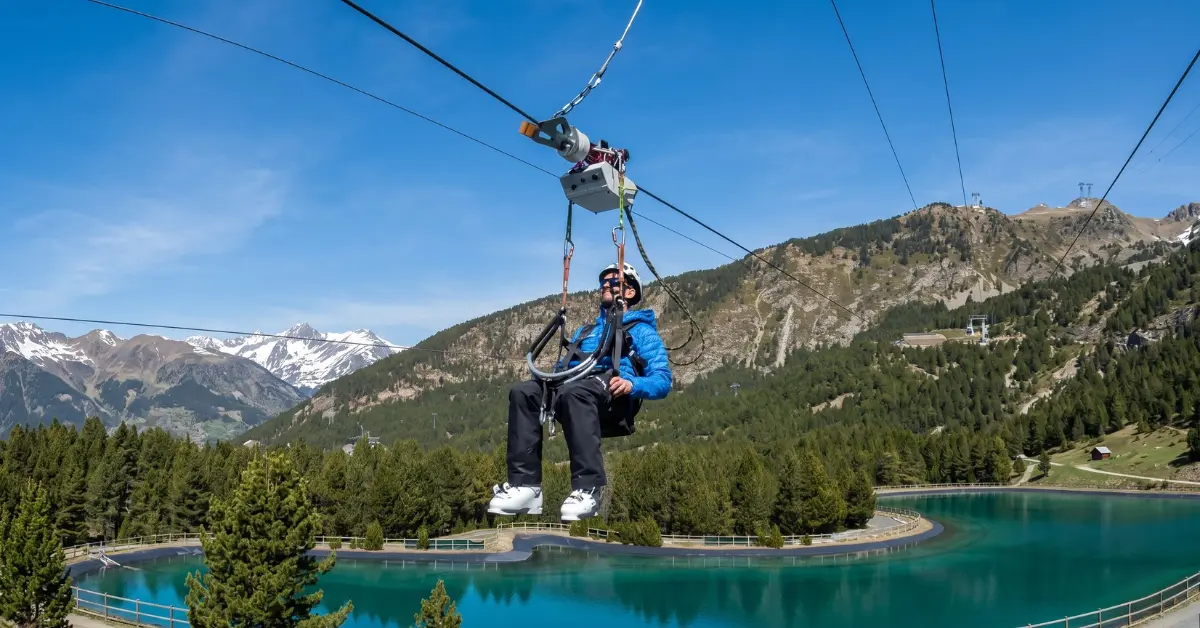
As a fully integrated bi-directional zipline trolley, the unit carries a rider safely down the line and then autonomously drives itself back up to the launch platform, navigating the exact same cable without the need for a secondary return mechanism.

By integrating advanced motor drives and intelligent eddy-current braking right into the trolley chassis, operators can achieve continuous, uninterrupted cycling of equipment without human intervention.
Core Advantages

Benefits of autonomous operation

⚙️

Reduced Operator Workload

With no manual hauling or secondary winching systems required, platform staff can focus entirely on guest experience and secure harnessing, drastically lowering OPEX.

⏱️

Maximized Throughput

The automated retrieval cycle eliminates the unpredictable waiting time associated with retrieving gear, allowing for a tighter, highly profitable dispatch cadence.

🛡️

Consistent Braking Safety

Built-in eddy current and friction braking protocols trigger automatically based on programmed track markers, regardless of rider weight or weather.

The Technology

How the ZipTronik system works

The core of the technology lies in its sophisticated zipline return system. As the rider descends, kinetic energy is captured and stored in onboard high-capacity batteries. This recovered energy is then intelligently deployed to power the electric motor for the return journey.

Furthermore, the system functions as a programmable zipline trolley. Using a digital control interface, adventure park builders can program specific descent profiles, set precise braking zones, and control the return speed. The trolley communicates wirelessly with the dispatch station, providing real-time telemetry on battery status, speed, and cycle counts.

 
1
Phase 1

Energy Capture

The regenerative power module captures kinetic energy during the gravity descent.

2
Phase 2

Telemetry & Braking

The trolley automatically executes safety protocols and logs cycle counts to the wireless dashboard.

3
Phase 3

Autonomous Return

Stored energy intelligently powers the electric motor for a controlled, self-propelled return up the line.

Strategic Deployment

Main use cases for automated units

While standard gravity trolleys are suitable for shorter lines, the bi-directional automated unit is a strategic investment for premium destinations.

Point-to-point

Mega-Ziplines & Transport

For lines spanning massive canyons or connecting distinct resort zones, manual retrieval is physically impossible. The autonomous system acts as a reliable transit pod.

Revenue targets

High-Volume Leisure Parks

Locations processing hundreds of riders daily rely on predictable turnaround times to hit rigid revenue targets and prevent bottlenecks on the platform.

Agile setup

Event Attractions

Pop-up ziplines at festivals benefit from the reduced structural footprint, as secondary return cables and winches are no longer necessary.

Asset Protection

Safety, training, and maintenance

An automated zipline trolley is a complex piece of electro-mechanical equipment. As such, ZipTronik’s framework places heavy emphasis on continuous safety monitoring and proactive maintenance.

Hardware reliability hinges on strict maintenance adherence. By integrating telemetry analytics, park managers can schedule targeted maintenance during off-peak hours, avoiding unplanned downtime and ensuring flawless continuous performance.

Operator Training: While daily physical operation is simplified, platform staff must undergo certified training on the digital control interface to adjust speed profiles and execute secure emergency override protocols.
Scheduled Maintenance Cycles: The smart trolley automatically logs cycle counts and alerts operators when wear-parts (such as bearings, drive wheels, and primary brake pads) approach their operational limits.
Technical Questions

Frequently asked questions

An automated zipline trolley is a complex piece of electro-mechanical equipment. If you require technical specifications for a tender, please contact our engineering team directly.

Does the trolley require an external power source during operation?

No. The ZipTronik trolley captures kinetic energy during the rider's descent and stores it in onboard high-capacity batteries. This recovered energy is then utilized to power the electric motor for the autonomous return trip.

How does the programmable zipline return system work?

The system is governed by a digital control interface where operators program specific return speeds, acceleration curves, and braking zones. The bi-directional zipline trolley communicates wirelessly with the dispatch station to ensure it returns safely without manual intervention.

What kind of maintenance schedule does an automated trolley require?

Maintenance is actively driven by cycle counts and live telemetry data. The trolley automatically alerts operators when specific wear-parts, like bearings and brake pads, need inspection or replacement.

Is specialized training needed for park staff?

Yes. While heavy manual hauling is eliminated, platform staff must complete certified training to operate the digital interface, correctly interpret telemetry data, and execute emergency override protocols to ensure maximum safety.

Can this system be used on flat or low-incline ziplines?

Yes. Because the bi-directional zipline trolley features onboard motorized drive capabilities, it can be programmed to smoothly transport riders across low-angle or point-to-point transit cables where gravity alone is insufficient for a standard descent.

EN 15567 Compliant Design Live Telemetry & Maintenance Data Regenerative Kinetic Energy Capture

Ready to automate your zipline operations?

Discover how a programmable return system can maximize your park's throughput and permanently reduce operator strain. Request a project evaluation today.