

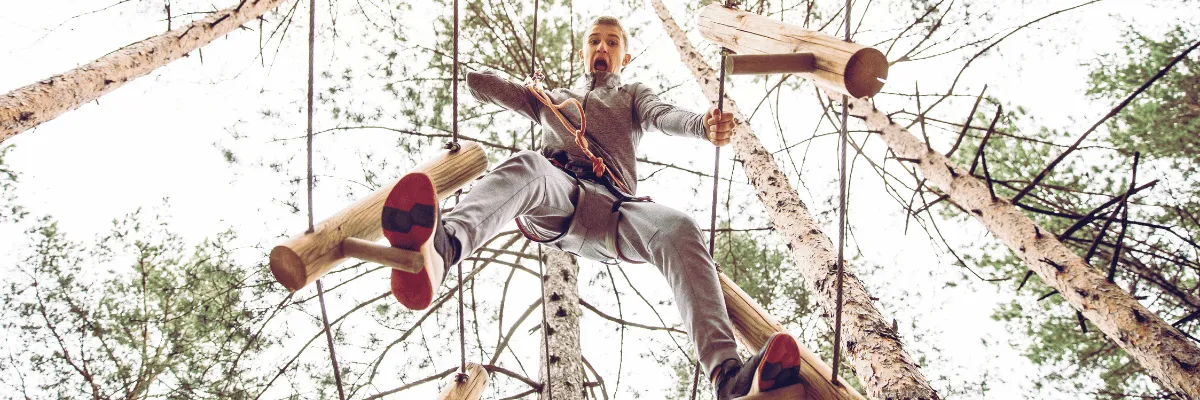
• 1.jpg
  • 2.jpg
  • 3.jpg
  • 4.jpg
  • 5.jpg
  • 6.jpg
◆ High ropes courses

A 7-stage roadmap from feasibility to opening day

Skywalker delivers every high ropes course through a structured, risk-mitigating framework developed over 20 years of project delivery. Each stage protects your capital, ensures full regulatory compliance, and establishes a verified path to commercial operation — before a single pole is installed.

Every project includes

Feasibility study fee fully credited to your construction contract
EN 15567 (European Ropes Course Standard) compliance as standard
Typical construction period of 6 to 8 weeks from site mobilisation
Binding fixed-price contract — zero hidden costs
Independent TÜV or equivalent certification at handover
The Skywalker approach

Engineering commercial success, not just structures
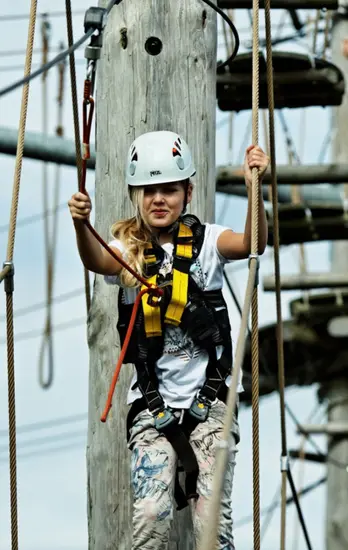
Skywalker high ropes course construction

Most adventure park projects fail at the business case, not the construction site. Generic contractors focus on structures. Skywalker focuses on throughput, operational efficiency, and a financial return that can be modelled before any capital is committed.

Our 7-stage roadmap begins by challenging your site assumptions — terrain, visitor flow, access constraints, and target demographic — and delivering a 3D concept with preliminary throughput models before you sign a construction contract.

An M-NDA is signed before any site data or technical specifications are exchanged in either direction. Your IP and ours are protected from the first conversation.
One team. One contract. Design, engineering, construction, certification, and training are managed by Skywalker under a single fixed-price contract with a single point of accountability. No gaps between separate firms.
Stages 1 to 4 — discovery through contract

From first site visit to a fixed-price commitment

 
1
Feasibility

Site assessment & feasibility study

After signing an M-NDA, our engineers assess terrain profiles, environmental constraints, access routes, and visitor flow potential. Output: a conceptual 3D render and preliminary throughput model. The feasibility fee is 100% credited back to the final construction contract.

The study fee is not a sunk cost — it is credited in full against the construction contract.
3D concept render Throughput model Consultancy service →
2
Concept

Concept design & 3D modelling

The design team translates feasibility findings into a full concept: layout, element mix, pole or tree anchoring approach, and a themed visual identity aligned with your brand and target audience. All concept and sketch phases require client input and approval before progression.

Every design concept is a collaboration — your vision, our engineering logic.
Visual identity Element selection Concepting & theming →
3
Engineering

Structural engineering & technical dossier

Full structural force analyses, cable tension calculations, anchor load ratings, and wind-load modelling are completed using proprietary simulation tools. All calculations comply with EN 15567 (European Ropes Course Standard) as a contractual minimum. The Technical Dossier produced here is required for regulatory approvals.

No ballpark ranges. Structural precision at this stage is what makes fixed-price contracting possible.
EN 15567 compliant Technical Dossier Design & architecture →
4
Contract

Permits, compliance & fixed-price contract

Early coordination with TÜV or equivalent inspection bodies and ERCA guarantees compliance before construction begins. The Technical Dossier supports all permit applications. A binding, itemized fixed-price contract is issued with zero hidden costs. Permits and country-specific approvals can be included as part of our services.

The fixed-price contract eliminates cost uncertainty before a single piece of equipment is ordered.
Zero hidden costs TÜV coordination Permit support available
Stages 5 to 7 — from groundbreaking to ongoing success

Precision delivery and long-term asset protection

 
5
Installation

Precision installation & construction

Skywalker's certified construction teams execute the engineering blueprints with no permitted deviation from design. Proprietary, eco-friendly anchor systems protect tree integrity where applicable. Freestanding pole configurations offer higher game density and a predictable maintenance budget. Typical construction period: 6 to 8 weeks from site mobilisation.

Pole-based construction eliminates environmental objections, tree mortality risk, and variable long-term maintenance costs.
Certified teams 6–8 weeks on-site Eco anchor systems
6
Commissioning

Commissioning, certification & staff training

A final Site Acceptance Test (SAT) is conducted by an independent inspection body — TÜV or an equivalent national authority. ERCA-standard staff training is delivered on-site covering harness protocols, inspection cycles, and emergency procedures. Complete technical dossiers and maintenance manuals are handed over at opening.

Certification by an independent body is a contractual deliverable — not an optional upgrade.
SAT by independent body ERCA-standard training Training & education →
7
Lifecycle

Ongoing lifecycle management

Bimonthly operational checks and mandatory annual inspections by Type C inspectors (EN ISO/IEC 17020) keep your facility at peak performance. Flexible maintenance contracts and HRM staffing solutions are tailored to your operational season. The commercial relationship extends far beyond handover.

A park that is properly maintained is an asset that generates revenue year after year. One that isn't becomes a liability.
Annual inspections HRM staffing solutions Lifecycle management →
Common questions

What investors and developers ask most

Is the feasibility study a separate, sunk cost?

No. The Stage 1 feasibility study fee is 100% credited back to your final construction contract. Its purpose is to ensure both parties commit to construction with verified data — not optimistic estimates — protecting your capital from the outset. It is the mechanism that eliminates costly revisions later in the project timeline.

How long does construction take from contract signing to opening?

The installation phase (Stage 5) typically takes 6 to 8 weeks from site mobilisation to completion. The total project timeline — covering feasibility, design, engineering, and permitting — varies by complexity and regional regulatory requirements, and is confirmed precisely in your fixed-price contract before any construction begins.

Which safety standards and certifications are included in the contract?

All Skywalker installations comply with EN 15567 (European Ropes Course Standard) as a contractual minimum. Final certification is performed by an independent body — TÜV or an equivalent national authority. Staff training at handover follows ERCA (European Ropes Course Association) standards. These are guaranteed contractual deliverables on every project, not optional upgrades.

Can the course be expanded after it opens?

Yes. Skywalker's modular construction approach allows additional elements, new circuits, or additional levels to be integrated after opening. Where site conditions allow, expansion capacity is documented in the original engineering dossier, keeping future capital expenditure predictable from day one.

Operating since 2005 — 20+ years of adventure park delivery Offices in Amsterdam, Dubai, and Riyadh Independent TÜV-certified installations as standard EN 15567 and ERCA-standard training on every project

Ready to start your ropes course project?

Our consultancy team will assess your site, define a concept, and produce a fixed-price proposal — with the feasibility fee credited back to construction.