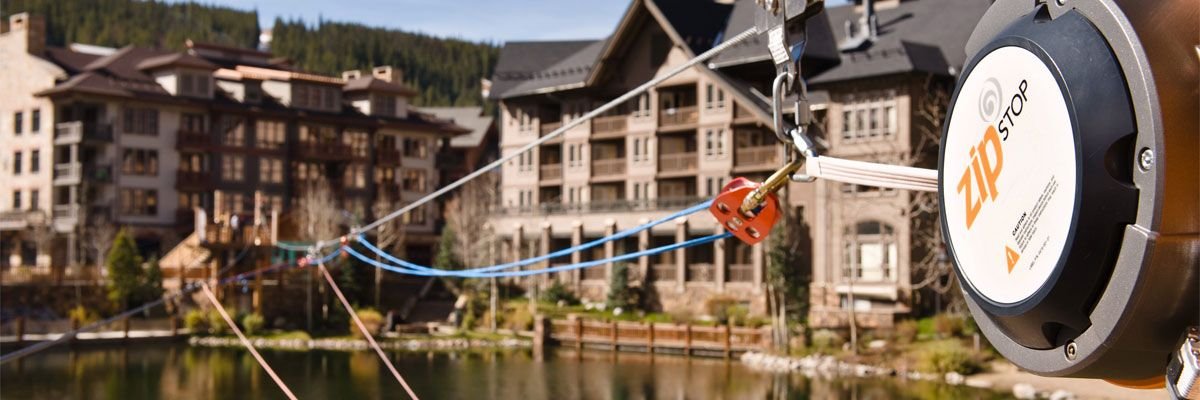
• 2.jpg
  • 1.jpg
  • 3.jpg
  • 4.jpg
  • 5.jpg
Safety & Belay Systems · Zipline braking

Zipline brake systems matched to your line

Every zipline needs a braking system that suits its arrival speed, rider weight range and throughput. A spring brake, a zipSTOP magnetic brake, a magnetic braking trolley and an emergency arrest device each do a different job, and most lines combine two of them. This page explains the options, how to choose and where to order the components.
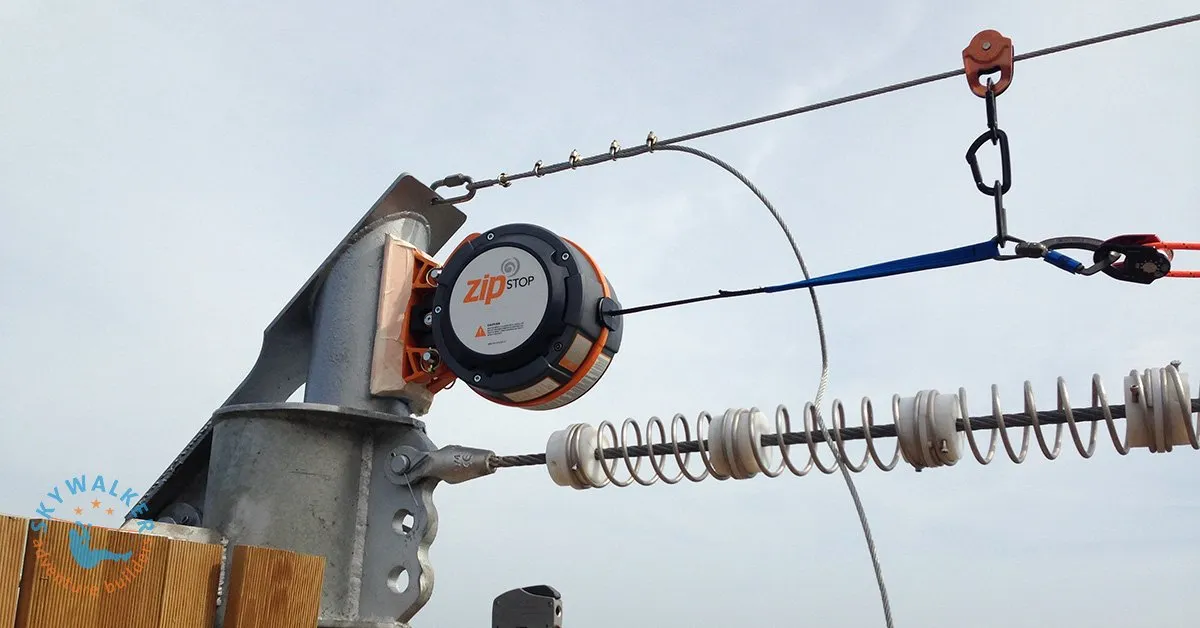
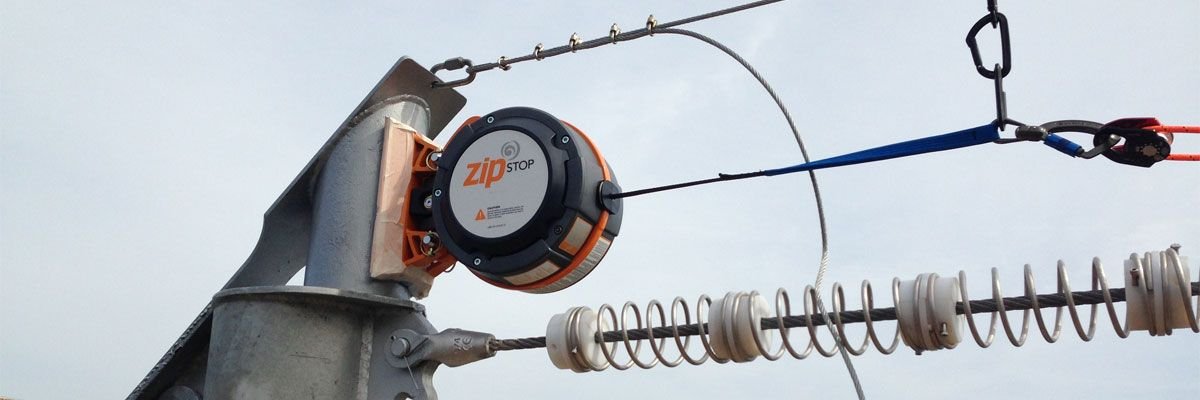
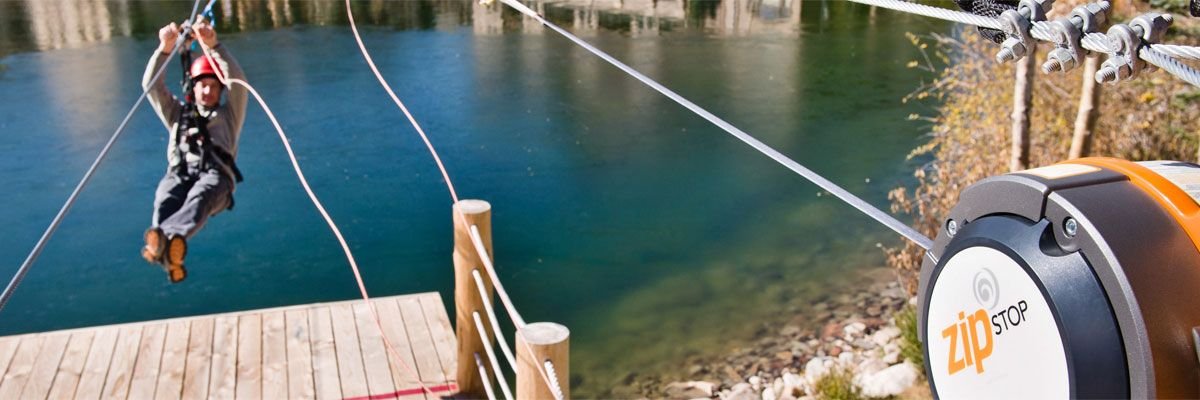
zipSTOP magnetic zipline brake with a spring emergency arrest device on a zipline

For commercial ziplines we size the braking system as part of zipline design and engineering, so the brake, the landing zone and the line profile work together.

Compare

Four braking methods, four jobs

Use the table to see which brake does what. The right combination always follows from the design of your line, not from a fixed rule.

Brake type
How it works
Typical role
Reset and upkeep
Spring brake
Compression springs absorb the trolley’s energy against a stop block on the cable.
End brake for moderate arrival speeds, or emergency arrest device behind the main brake.
No reset needed; check spring length, spacers and cable at the brake.
zipSTOP magnetic brake
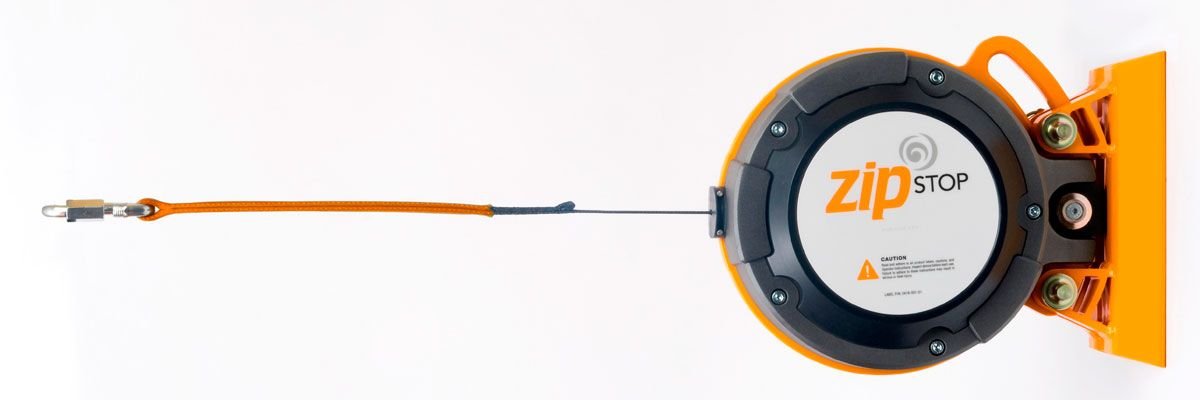
The trolley catches a line that runs out from a brake unit; eddy-current magnets increase the braking force with speed.
Primary end brake for higher arrival speeds and a wide rider weight range.
Retracts automatically; service and inspection per the manufacturer’s instructions.
Magnetic braking trolley
Magnets in the trolley regulate speed along the cable.
Speed control on the line. Always combined with an end brake.
Inspect trolley, magnets and sheaves per the manufacturer’s instructions.
Emergency arrest device (EAD)
A separate stop that only acts if the rider arrives too fast or the main brake does not engage.
Backup behind the primary brake; need and type follow from the line design to EN 15567-1.
Inspect after every activation and at the annual main inspection.

For a deeper look at active and passive braking, read the zipline braking systems guide.

Selection

How to choose a zipline brake system

These factors decide which brake, or which combination, fits your line:

✓
Arrival speed and line profile: the faster riders reach the landing zone, the more energy the brake has to absorb.
✓
Rider weight range: a light child and a heavy adult must both stop comfortably with the same set-up.
✓
Throughput: how quickly the brake resets decides how many riders per hour the line can handle.
✓
Environment: outdoor exposure, sand, salt air and temperature affect components and inspection intervals.
✓
Maintenance capacity: what your team can inspect and service day to day.

Read more per brake type

Zipline spring brakes explains spring brakes as end brake or emergency arrest device. Self-braking magnetic zipline trolleys covers speed control on the line. For the zipSTOP, see the zipSTOP Pivot Mount.

Order components

Brakes, trolleys and harnesses

Braking, trolleys and harnesses work as one system, so choose them together. Order directly from our shop:

After installation

Training and lifecycle support

Your team needs to know how to inspect and reset the brakes every day. We provide staff training and lifecycle management, including inspection schedules and component replacement. See also how to inspect zip line trolleys.

Common questions

Zipline brake systems: FAQ

Which zipline brake system do I need?

That depends on the arrival speed, the rider weight range and the throughput of your line. Most commercial lines combine a primary end brake with an emergency arrest device. Our engineers size the combination as part of the line design.

Can a spring brake be the primary brake?

Yes, if the braking system has been engineered for that use by a qualified engineer and tested before passenger service. Otherwise it works as an emergency arrest device behind the main brake.

Does a magnetic braking trolley replace the end brake?

No. A magnetic trolley controls speed on the line, but it does not stop the rider. It always works together with an end brake.

Do I need an emergency arrest device?

Whether an emergency arrest device is needed, and which type, follows from the design and risk assessment of your line to EN 15567-1.

How often should brakes be inspected?

Check brakes daily before use, follow the manufacturer’s service intervals and include them in the annual main inspection (EN 15567-2).

✓ Founded 2005✓ Designed to EN 15567✓ Zipline engineering in house✓ Offices in Ede, Amsterdam, Dubai and Riyadh

Need a braking system for your zipline?

Order brake components in our shop, or ask our engineers to size the braking system for your line.