



• 1.jpg
  • 2.jpg
  • 3.jpg
  • 4.jpg
  • 5.jpg
  • 6.jpg
  • 7.jpg
  • 042A8449-LowRes.jpg
  • inclusive-climbing.jpg
  • JULY-24-071.jpg
  • JULY-24-079.jpg
  • RVR_zipline-06.jpg
Planning an indoor zipline construction project? Explore zip coaster design, safety standards, and retrofitting tips.
◆ Indoor Zipline Construction · Operator Guide

The Operator's Guide to Indoor Zipline Construction

Mastering indoor zipline construction requires a deep understanding of spatial constraints, safety engineering, and guest experience optimization. Professional operators looking to elevate their family entertainment centers must navigate complex structural requirements to safely integrate these suspended indoor rides. By executing a flawless installation, you can dramatically increase visitor retention and operational profitability.

Executive Summary

Key Takeaways

Space utilization: Maximize overhead airspace without sacrificing valuable ground-level revenue zones.
Structural integrity: Strict adherence to engineering assessments is critical for managing active ceiling truss loads.
Operational efficiency: Automated launch and braking systems ensure high capacity and reduce staff requirements.
Rapid deployment: Turnkey modular structures offer rapid ROI and minimal facility downtime during installation.
Engineering Strategy

Mastering zip coaster design and structural engineering

Implementing a rigid rail system transforms a standard overhead cable into a dynamic, gravity-driven rollercoaster experience. Operators must prioritize seamless track geometry to maintain momentum while ensuring the safety of every rider navigating the course. Precision zip coaster design dictates the overall success and longevity of the attraction.

Designing for tight spaces and retrofitting

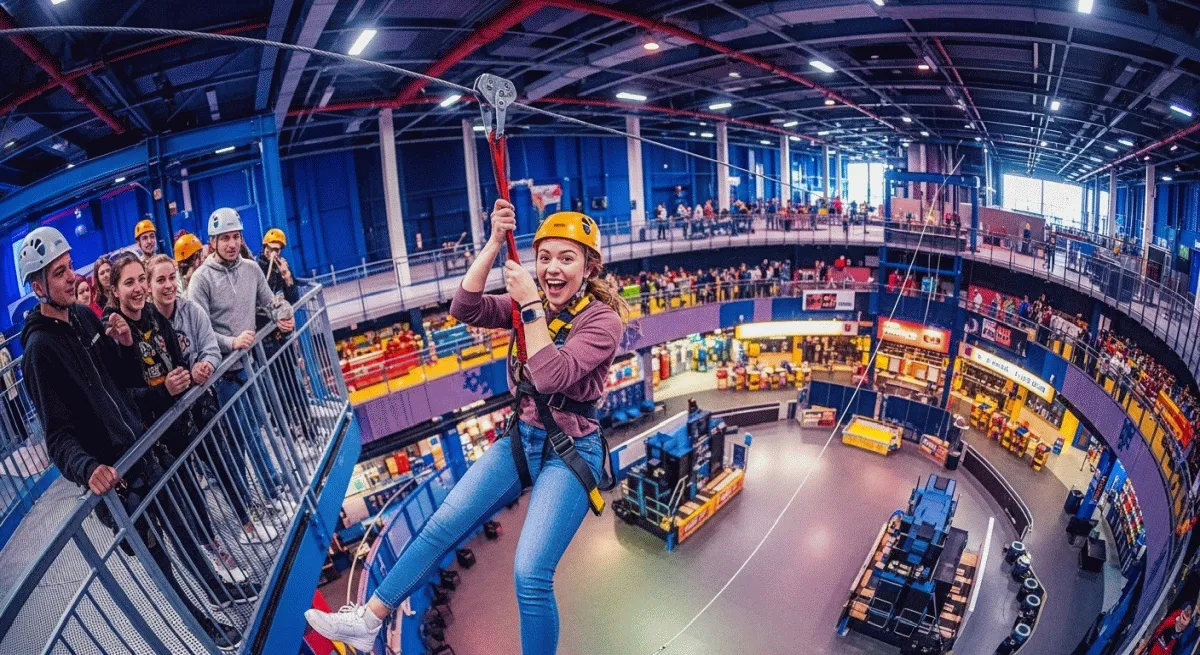
Maximizing vertical airspace is crucial when designing attractions within existing family entertainment centers. Utilizing a multi-vectored rail configuration allows operators to weave the track around existing infrastructure and other floor-level activities. Furthermore, integrating a new ride into an operational building demands strategic retrofitting. Installing turnkey modular structures ensures the track can be adapted to the specific dimensions of your facility with minimal downtime, creating a highly visible anchor attraction.

Strategic Advantage Dynamic suspended indoor rides act as a visual marketing tool, drawing the attention of guests engaged in other ground-level activities. Utilizing existing architectural features reduces the need for expensive freestanding support towers, significantly lowering initial capital expenditure.

Calculating ceiling truss load capacity

Safety compliance is the non-negotiable foundation of any successful indoor adventure installation. Proper structural engineering assessments must be conducted before hardware is mounted. The host building's roof structure must be evaluated to handle the dynamic forces generated by swinging riders. Distributing this weight effectively prevents structural fatigue and guarantees long-term operational safety. Meeting rigorous international safety frameworks, such as EN 15567 and OSHA guidelines, ensures your attraction operates flawlessly while protecting your business.

Facility Management

Optimizing operational flow for maximum profitability

A high-capacity attraction is only profitable if the operational logistics allow for rapid, safe rider turnover. Streamlining the dispatch and retrieval process reduces wait times and maximizes the number of tickets sold per hour. Efficient throughput directly impacts the overall guest satisfaction and the bottom line.

Automating launch systems and managing acoustics

Manual dispatch protocols create bottlenecks and increase physical strain on operational staff. Implementing an automated launch and braking mechanism guarantees consistent, safe departures. This technology reduces human error and minimizes maintenance expenditure through advanced magnetic braking. Furthermore, the confined environment of an indoor park amplifies mechanical noise. Operators must focus on strategic acoustic management, utilizing specialized trolley wheels and sound-dampening rail mounts to keep the environment pleasant.

By prioritizing robust engineering, automated safety systems, and seamless operational flow, family entertainment centers can unlock entirely new, high-margin revenue streams and transform vertical airspace into an unforgettable guest experience.
Expert Answers

Frequently asked questions

Can you build a zipline indoors?

Yes, utilizing a specialized rigid rail system allows operators to safely install dynamic rides inside confined buildings. Proper indoor zipline construction relies on leveraging existing structural columns and roof trusses to support the track. This creates a high-thrill, weather-independent attraction for any family entertainment center.

How much space is needed for an indoor zipline?

A standard indoor installation typically requires a minimum operational footprint of roughly 85 meters in track length. You must also account for a three-meter safety clearance envelope surrounding all dynamic sections of the track. Adequate vertical height is necessary to build the required gravity descent or accommodate motorized lift systems.

What are the safety standards for indoor zip coasters?

These attractions must comply with strict international guidelines, such as the EN 15567 standards for ropes courses and recreational facilities. Facilities must implement automated magnetic braking systems to guarantee a safe, controlled deceleration for every rider. Routine structural inspections and rigorous staff training are mandatory to maintain these safety certifications.

How do you attach a zipline to a ceiling truss?

Engineers distribute the dynamic load of the ride by attaching a web of heavy-duty support cables directly to the building's steel framework. Calculating the exact ceiling truss load capacity is critical to ensure the roof can safely handle the forces of active riders. In spaces where the roof is insufficient, supplemental freestanding steel poles are utilized.

What is the ROI of adding a zip coaster to a family entertainment center?

Suspended indoor rides act as massive visual magnets that drive foot traffic and significantly extend the average guest dwell time. Because indoor zipline construction utilizes unused overhead airspace, it generates high-margin revenue without consuming valuable ground-level square footage. Operators typically see a rapid return on investment due to the premium ticket pricing these unique attractions command.

Ready to upgrade your indoor facility?

Our consultancy team will assess your building's structural capacity, define a zip coaster concept, and produce a fixed-price turnkey proposal.

Related reading

More on zip-technology

Product Ziplines & Zipwires

Cable grades, span configurations and throughput planning for commercial zipline installations.

Product Bi-Directional Zipline Trolleys

Return-trip zipline technology that eliminates walk-back queues and increases hourly capacity.

Product ZipCoaster — Rollercoaster Zipline

A seated, track-guided zipline engineered for resort-scale throughput and sustained guest excitement.

Product category Thrill Adventures — Full Range

ZipCoaster, free-fall devices, adventure towers and the complete Skywalker thrill attraction lineup.

Product Zipline Brake Systems

Passive and active braking options matched to terrain profile, cable length and rider weight range.

Service Zipline Design & Engineering

What an engineered zipline specification covers — and why site-specific design protects your permit and insurance position.

Shop Order: Zipline Braking Systems

Certified zipline brakes for new installations and replacement orders.

Shop Order: Zipline Trolleys

Compatible trolley sets for standard and bi-directional zipline configurations.

Shop Order: Zipline Harnesses

EN 15567-compliant harness range for guest-facing zipline operations.

Turnkey planning Build Your Park

Planning a full destination with multiple zipline attractions? The Skywalker turnkey process starts with a fixed-price feasibility study.