
• 1.jpg
  • 2.jpg
  • 3.jpg
  • 4.jpg
  • 5.jpg
  • 6.jpg
  • 7.jpg
  • 042A8449-LowRes.jpg
  • inclusive-climbing.jpg
  • JULY-24-071.jpg
  • JULY-24-079.jpg
  • RVR_zipline-06.jpg
Master the art of adventure park infrastructure by consolidating utilities and storage to maximize your return on investment during the build phase.
◆ Adventure Park Infrastructure · Master Planning

The Operational Benefits of Centralized Adventure Park Infrastructure

Developing smart adventure park infrastructure is the most effective way to drastically reduce initial civil engineering costs while boosting long-term operational efficiency. By shifting away from scattered layouts and embracing a centralized design, facility operators can eliminate redundant construction expenses. This streamlined approach ensures that every square meter of your site actively contributes to visitor engagement and profit optimization.

Executive Summary

Key takeaways

Consolidated master planning reduces trenching, wiring, and foundational footprint, directly improving ROI.
A centralized core hub lowers staffing requirements while optimizing visitor orientation and traffic flow.
Grouping ticketing, PPE storage, and food services drives higher secondary spend and eliminates check-in bottlenecks.
Dual-purpose pathways ensure safe emergency evacuation and maintenance access without expensive secondary roads.
Cost Reduction

Centralizing infrastructure to cut aerial park construction costs

Prioritizing smart layouts from the initial planning phase is the single best way to control runaway leisure park civil engineering costs. A consolidated master plan minimizes the footprint of foundational groundwork, directly improving your overall return on investment.

Reducing costs with centralized park design

Building multiple scattered facilities across a site requires redundant trenching, wiring, and pathway construction that quickly drains budgets. Consolidating your primary operations into a single zone drastically reduces the required scope of heavy infrastructure. This targeted build strategy ensures capital is spent on high-impact, visitor-facing attractions rather than hidden underground utility networks.

The core hub concept in park design

Designing your site around a primary operational focal point creates a logical center for both staff management and visitor orientation. This layout allows operators to maintain strict control over site access while lowering overall daily staffing requirements.

  • Reduced staffing needs: Centralized monitoring requires fewer employees to oversee multiple active zones.
  • Optimized visitor routing: Guests naturally flow toward a single, easily identifiable starting point upon arrival.
  • Lower foundation costs: Concentrating structures requires fewer extensive load-bearing foundation standards across the property.
Visitor Flow

Consolidating operations and optimizing flow

Consolidating PPE storage, ticketing, and F&B

Grouping your point-of-sale, harnessing zones, and food services into one continuous structure severely cuts down on architectural and construction expenses. This unified approach accelerates the guest check-in process, actively preventing staging bottlenecks during peak operational hours. It also creates immediate up-sell opportunities as visitors easily transition from ticketing directly into food and retail areas.

Optimizing visitor flow in adventure hubs

A well-planned core hub intuitively guides guests from arrival to activity without requiring excessive directional signage or staff intervention. This natural progression builds visitor anticipation while keeping primary staging areas clear of unnecessary congestion. Streamlined physical movement translates directly to higher daily throughput and enhanced profit optimization.
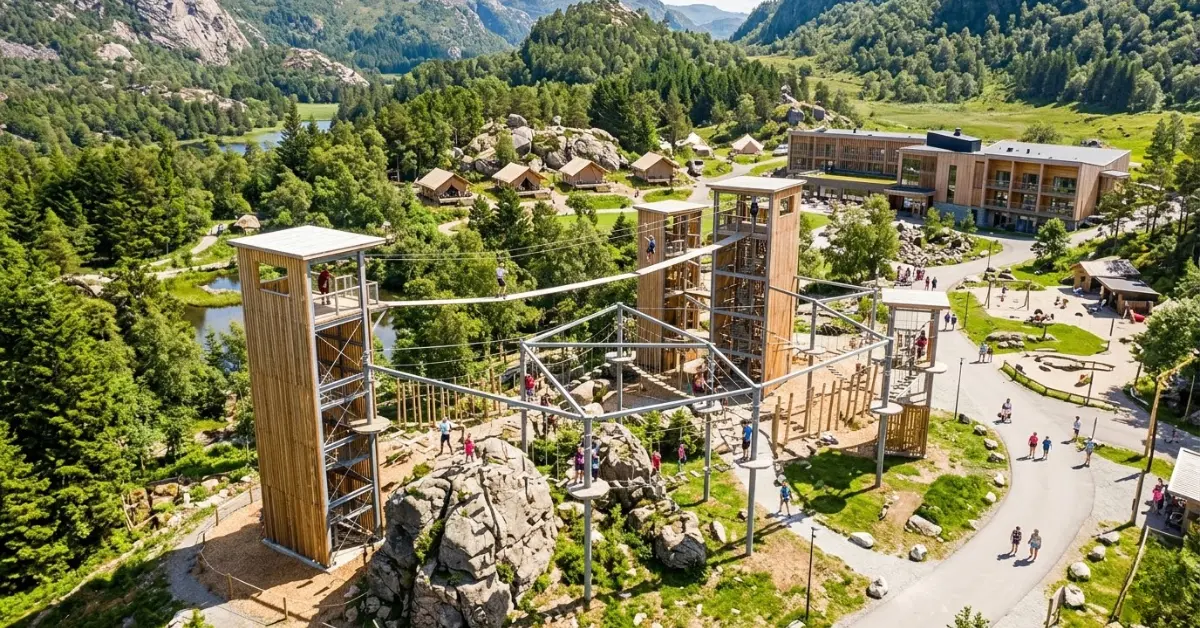
Overhead view demonstrating centralized adventure park infrastructure and optimized visitor flow mapping.

Professional strategies for adventure park infrastructure prioritize natural flow, emergency access, and maintenance efficiency.

Site Efficiency

Shared utilities for multi-attraction ecosystems

Developing a centralized multi-attraction ecosystem eliminates the need to run duplicate water, power, and data lines across vast outdoor spaces.

Shared utilities for multi-activity centers

Creating a single, robust utility grid for your entire operational center significantly decreases initial trenching and material costs. When future expansion becomes necessary, tapping into an existing centralized node is far cheaper than developing entirely new independent utility lines. This strategy future-proofs the facility while maintaining strict control over monthly energy consumption and maintenance overhead.

Designing access for emergency evacuation and maintenance

Safety and upkeep must be integrated directly into the structural layout to satisfy strict emergency evacuation protocols without destroying the site's aesthetic appeal.

Cost-effective civil engineering for leisure sites

Planning dual-purpose pathways ensures that maintenance vehicles and emergency responders can access critical points without building separate, costly utility roads. Centralizing heavy infrastructure near the site's natural access points minimizes the need for extensive land grading and tree removal. This careful balancing act protects the natural environment while keeping essential operational access highly efficient and fully compliant.

Mastering your adventure park infrastructure ultimately transforms a sprawling, expensive build into a tightly profitable, easily managed operational asset. By keeping core services centralized and utilities shared, developers can protect their bottom line from bloated civil engineering costs. This strategic approach secures long-term site viability while consistently delivering a safe, high-quality visitor experience.

Common Questions

Frequently asked questions

How does centralized infrastructure reduce adventure park construction costs?

Centralized adventure park infrastructure limits the physical footprint required for foundational work, plumbing, and electrical trenching. By building fewer scattered facilities, developers avoid redundant construction tasks and slash their initial capital expenditure. This ensures more budget is preserved directly for building high-impact aerial attractions.

What are the benefits of a core hub design for leisure parks?

A core hub layout inherently streamlines both visitor flow and staff deployment by creating one main operational focal point. This configuration improves operational flow optimization and significantly reduces the daily overhead needed to manage guest transitions. It also naturally encourages higher secondary spend by placing food and retail directly in the visitor's path.

How can shared utilities improve operational efficiency in aerial parks?

Operating off a single, consolidated utility grid makes routine maintenance much faster and easier for technical staff to perform. It prevents the need to service isolated power or water sources scattered across the entire property. This smart approach to adventure park infrastructure minimizes system downtime and lowers monthly utility bills.

What is the best way to design emergency access for adventure facilities?

The most effective strategy is to design wide, durable pathways that serve as both primary guest walkways and secure emergency vehicle routes. This dual-purpose design meets strict emergency evacuation protocols without requiring a secondary, visually intrusive road network. Centralizing these access routes near the main hub ensures rapid response times during any incident.

How do you optimize visitor engagement through smart park layouts?

Smart layouts remove navigational friction, allowing guests to transition from check-in to their chosen activity seamlessly and safely. Minimizing wait times through efficient staging areas keeps visitors excited and engaged rather than frustrated. An intuitive core hub guarantees a highly positive, immersive experience from the exact moment guests arrive on site.

Optimized Visitor Flow Reduced Civil Engineering Spend Streamlined Operations

Ready to start your project?

Our consultancy team will assess your site, define a concept, and produce a fixed-price proposal — with the feasibility fee credited back to construction.

Related reading

Explore the adventure business

Turnkey planning Build Your Park

The full Skywalker process: from fixed-price feasibility study through design, engineering and opening day.

Service Consultancy — Feasibility & Concept

What a Skywalker feasibility study covers — and how the fee credits back into construction cost.

Service Design & Architecture

How Skywalker translates a site concept into engineered construction drawings and permit-ready specifications.

Service Concepting & Theming

Turning a site brief and investor vision into a coherent, themed guest experience with commercial logic.

Service HRM & Operations Planning

Staffing structures, hiring frameworks and operating model design for adventure parks at scale.

Product AirCruizer Cable Bicycle

An aerial cable bicycle that adds a low-intensity, family-accessible revenue stream to any adventure destination.

Product Net Adventure

Multi-level suspended net structures — high dwell time, low staffing cost, strong ROI for family parks.

Product Ultimate Adventure Tower

A vertical multi-discipline anchor attraction that drives park-wide footfall and upsell across adjacent attractions.

Service Zipline Design & Engineering

Engineered zipline specifications — why site-specific design protects your permit, insurance and long-term operating margin.

Products overview All Products — Attraction Range

Browse the full Skywalker product range to plan your park's attraction mix and revenue model.