






The 7-Stage Authority Roadmap for Construction
Understanding the complete adventure park construction process is the most effective way to reduce investment risk and prepare a profitable launch. Professional leisure destination builders do not view construction as a mere series of tasks, but as a strict risk mitigation sequence. This proven roadmap protects your capital and the safety of your future visitors.
Key Takeaways
Project Discovery and Pre-Feasibility
Thorough preparation determines the long-term success of any new facility. Stage 1, Project Discovery, starts with a mutual non-disclosure agreement (M-NDA) to protect proprietary designs and sensitive site data.
Generic advice is insufficient for high-stakes infrastructure. In Stage 2, a paid Pre-Feasibility Site Consultancy validates the terrain profile and financial viability. This protects your capital by confirming that the vision fits local regulations and commercial tourism operations.
Master planning (Module 3A)
At the start of Stage 3, master planning turns the validated concept into an efficient logistical flow that supports visitor throughput. Leisure destination builders map out zones for high-capacity ropes courses, centralized safety briefings and hospitality infrastructure.
This strategic zoning extends visitor dwell time and increases the secondary spending that supports a faster return on investment.
Design, Engineering, Permits and Net Quote
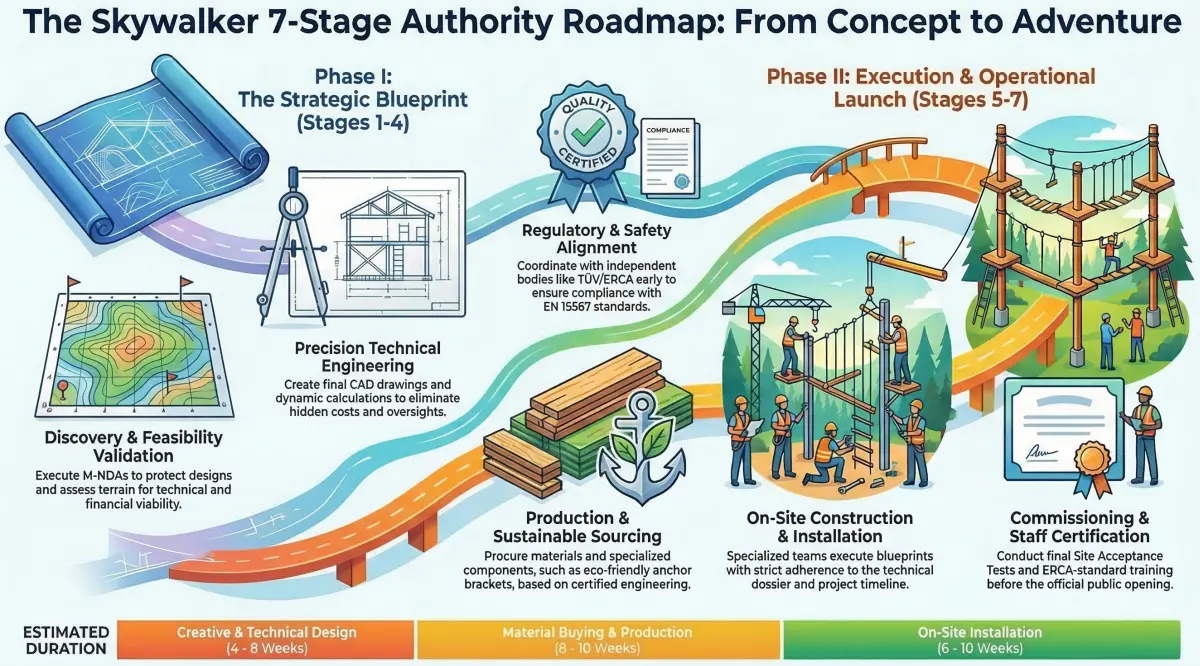
The seven-stage roadmap for turning a raw site into a certified, high-capacity adventure destination.
Moving from the drawing board to physical creation requires specialized technical oversight. Transitioning from concept to reality demands precision structural engineering tailored to your specific topography and chosen materials.
Stage 3 produces a complete Construction Book that supports the permitting process with local authorities (Stage 4: Regulatory & Certification Path). In Stage 5 we then issue the Fixed-Price Net Quote: a binding fixed net price per product, valid within the agreed price window.
Fabrication and preparation
In Stage 6, components are fabricated off-site under strict quality control, using sustainable materials, so every component meets the European safety standards.
Mapping out precise spatial requirements beforehand significantly reduces on-site assembly time. This careful preparation helps make your recreational infrastructure design both durable and visually striking.
Fabrication and Installation
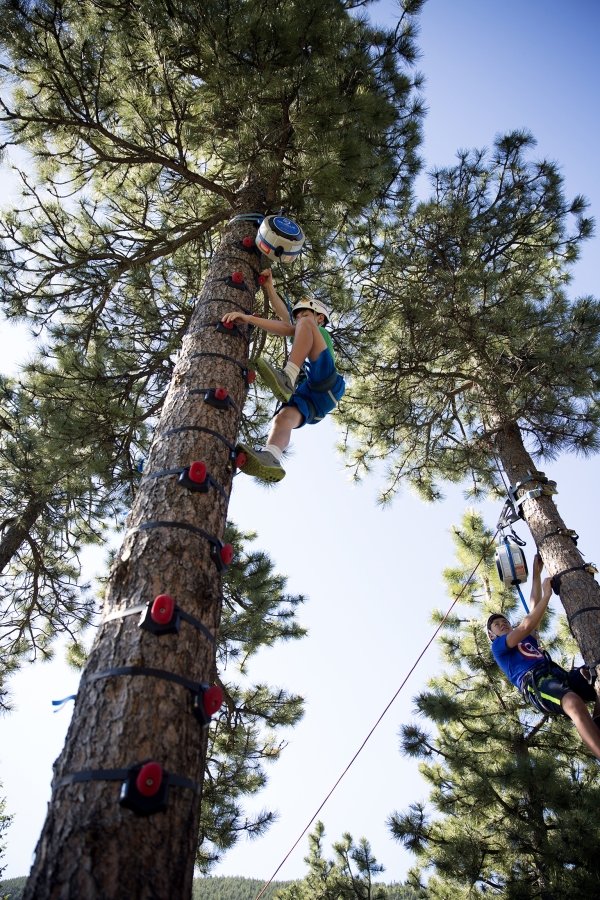
The physical construction accelerates as our specialized teams arrive to carry out the on-site works. Whether integrating freestanding poles or using existing healthy trees, eco-friendly anchoring devices provide structural integrity with minimal environmental impact.
This phase demands extreme logistical coordination to keep the project strictly on schedule and within the established budget. Professional installers work closely with regional contractors to handle groundworks, parking infrastructure, and foundational requirements.
- Maximized operational lifespan with eco-friendly anchoring.
- Seamless integration of automated belay systems.
- Reduced site disruption during the assembly phase.
Commissioning, Training & Lifecycle
Before any guest steps onto the course, the entire facility is inspected by an independent inspection body (e.g. TÜV) in a Site Acceptance Test. This final step documents compliance, supports your insurance and prepares the park for opening day.
The handover process includes comprehensive operational training for your staff, covering advanced rescue techniques and daily maintenance protocols. We equip your team with the technical manuals and practical skills needed to run the park safely and efficiently.
Properly trained staff reduce ongoing liability, and the Lifecycle Management programme protects the long-term profitability of your new leisure destination.
Frequently Asked Questions
What is the adventure park construction process?
The adventure park construction process is a seven-stage framework covering everything from project discovery to commissioning. It provides a structured roadmap for designing, engineering and installing high-capacity aerial attractions. This systematic approach keeps the destination commercially viable, structurally sound and designed to EN 15567 and the standards that apply locally.
How do leisure destination builders minimize investment risk?
Professional builders use a paid pre-feasibility study and master planning to validate a site's potential before heavy capital is deployed. With a mutual non-disclosure agreement in place and realistic visitor throughput forecasts, operators can make data-driven financial decisions. This proactive risk mitigation prevents costly redesigns and supports a faster return on investment.
What are the stages of building a turnkey adventure park?
A turnkey build moves through seven stages: Project Discovery, Pre-Feasibility Site Consultancy, Design & Engineering, the Regulatory & Certification Path, the Fixed-Price Net Quote, Fabrication & Installation, and Commissioning, Training & Lifecycle. Specialized teams manage each stage for careful execution and budget control. The final stage always includes staff training and an independent inspection before opening day.
How long does it take to construct an aerial adventure course?
The physical installation on-site typically takes six to eight weeks for a typical course; larger parks take longer. The entire timeline, including concept, engineering and permits, can span several months. Weather, site accessibility and the chosen safety systems also affect the overall construction schedule.
Why is safety certification important for new adventure parks?
An independent inspection before opening (e.g. TÜV) is required in many countries and by most insurers, and it protects your business from liability. It confirms that every cable, platform and harness meets the safety standards before public use. An independently inspected park builds trust with your visitors and reduces the likelihood of accidents.
Related Services & Products
Ready to start your project?
Our consultancy team will assess your site, define a concept, and produce a fixed-price proposal — with the feasibility fee credited back to construction.
Explore the adventure business
The full Skywalker process: from fixed-price feasibility study through design, engineering and opening day.
What a Skywalker feasibility study covers — and how the fee credits back into construction cost.
How Skywalker translates a site concept into engineered construction drawings and permit-ready specifications.
Turning a site brief and investor vision into a coherent, themed guest experience with commercial logic.
Staffing structures, hiring frameworks and operating model design for adventure parks at scale.
An aerial cable bicycle that adds a low-intensity, family-accessible revenue stream to any adventure destination.
Multi-level suspended net structures — high dwell time, low staffing cost, strong ROI for family parks.
A vertical multi-discipline anchor attraction that drives park-wide footfall and upsell across adjacent attractions.
Engineered zipline specifications — why site-specific design protects your permit, insurance and long-term operating margin.
Browse the full Skywalker product range to plan your park's attraction mix and revenue model.