• news_header-01.png
  • news_header-02.png
  • news_header-03.png
  • news_header-04.png
  • news_header-05.png
  • news_header-06.png
  • news_header-07.png
◆ OxIron · Bi-Directional Ziplines

OxIron: ZipTronik's new mechatronic trolley for cable travel

A gravity trolley does one thing: it runs downhill. Everything else, from holding the rider's speed to getting the trolley back to the start, is left to brakes, staff and vehicles. OxIron, the new ZipTronik carriage from Skywalker, ZipTronik's worldwide implementation partner, is built to do all of it on the cable itself. It weighs 12.2 kg without its battery, carries up to 130 kg, controls its speed between 5 and 120 km/h and climbs slopes of up to 20°, under manual or automatic control.

In brief

Key takeaways

  • OxIron is a multi-purpose mechatronic carriage for cable travel: passenger transport, events and load carrying.
  • Manufacturer figures: 12.2 kg without battery, up to 130 kg carried, controlled speed 5–120 km/h, slopes up to 20°.
  • It runs under manual or automatic control, with programmable travel scenarios set per installation.
  • Energy is cumulative and/or regenerative: stored on board and, where the line allows, recovered during descent and braking.
  • Skywalker is ZipTronik's worldwide implementation partner: line assessment, integration and lifecycle support.
  • What a specific line allows, from arrival speed to uphill payload, is confirmed on the line profile before configuration.
Introducing OxIron

A new generation of mechatronic carriages

ZipTronik presents OxIron as the next step for autonomous travel on cable, and it has been shown in real conditions rather than on a test bench. The footage below shows the carriage running a line high above a stadium roof: it travels out along the cable, holds its line in open air and returns under control.

Where earlier ZipTronik trolleys were developed mainly around one job, automating the return on a zipline, OxIron is positioned as a single platform for several. The same carriage is offered for passenger lines, event installations and load transport, configured per site. It extends the bi-directional zipline trolley concept to uses beyond the classic descent.

OxIron on a cable line above a stadium roof, in real operating conditions.

Specifications

OxIron in numbers

12.2 kg
Weight without battery
130 kg
Maximum carried weight
5–120
Controlled speed, km/h
20°
Maximum slope climbed
✓
Energy: cumulative and/or regenerative
✓
Control: manual or automatic
✓
Programming: programmable travel scenarios
✓
Use: passenger transport, events, load carrying
✓
Integration and maintenance: designed to be simple
NoteThese are the manufacturer's published figures for the carriage. The speed, climb and payload a specific installation allows depend on its length, drop, sag and arrival geometry, and are set in the line study.
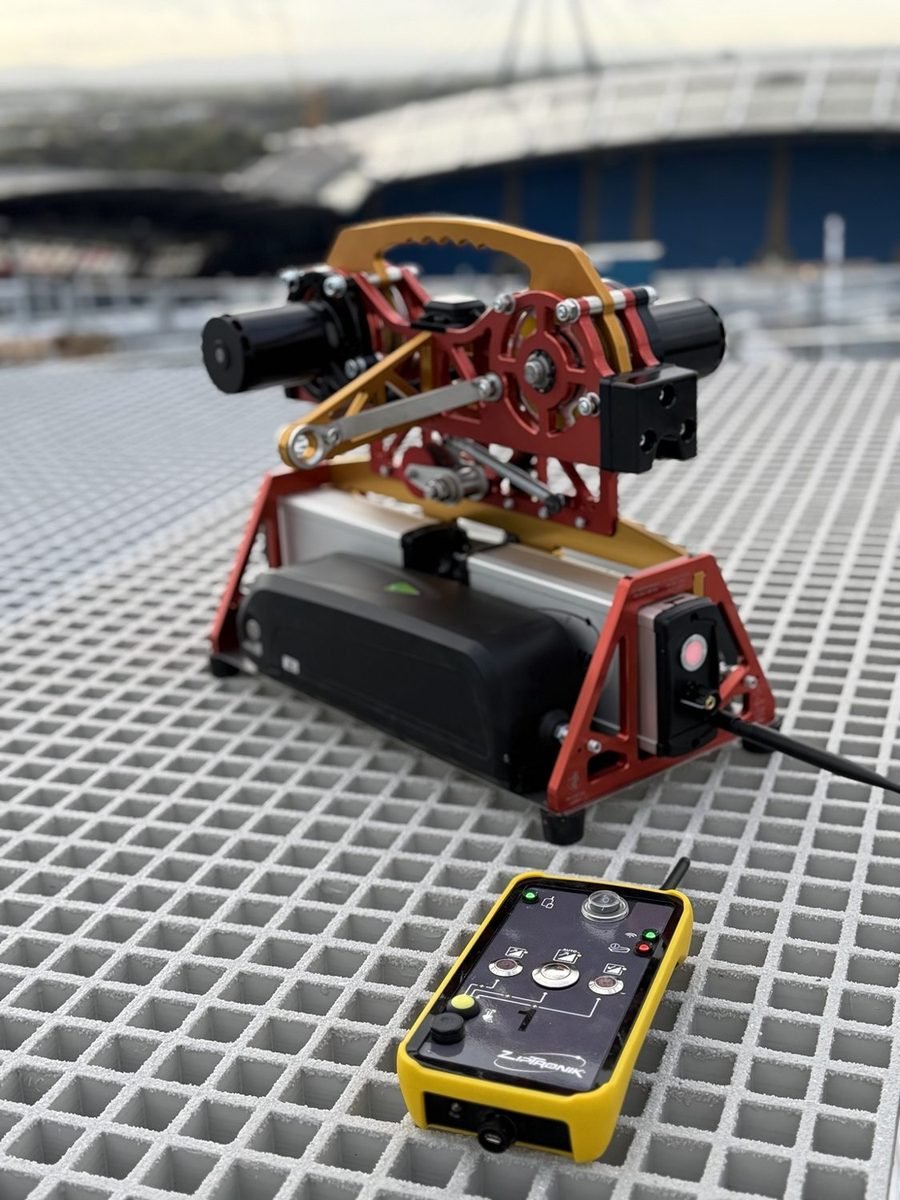
OxIron trolley with red frame, removable battery pack and yellow handheld remote control on a grating platform

OxIron with its handheld remote control.

Design

Built around the cable, the battery and the operator
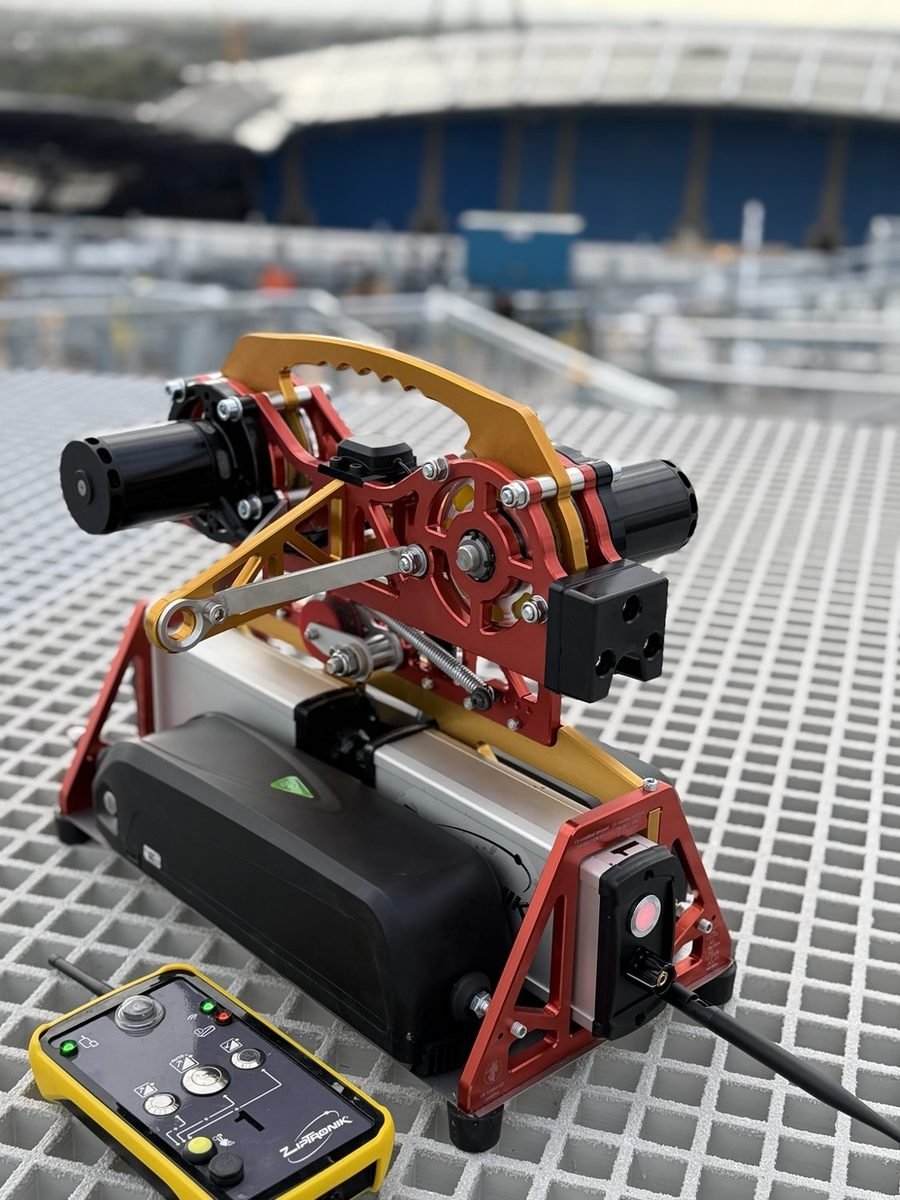
Close-up of the OxIron trolley mechanism: red machined frame, gold arm and cable sheave assembly above a black battery pack

The carriage mechanism above the removable battery pack.

A compact, open mechanism

The published photographs show a carriage built from machined plates: a red frame carrying the cable mechanism on top, with the battery pack mounted low underneath. The layout keeps the mass under the cable and leaves the mechanical parts visible and reachable, in line with ZipTronik's stated aim of simplified integration and maintenance.

Battery on board, operator in control

OxIron's energy is described as cumulative and/or regenerative. The battery stores energy for travel; where the line has enough drop, energy taken out during descent regulation and braking can be put back. Control is manual from a handheld remote, or automatic, running travel scenarios programmed for the installation.

Where it comes from

From energy recovery to a multi-purpose platform

OxIron builds on ZipTronik's original principle: recover energy on the way down and reuse it on the way back up. On earlier ZipTronik trolleys, energy taken out of the descent through speed regulation and end-of-line braking is stored and released for the return, allowing many cycles between recharges depending on the installation. Where a line has too little drop for that, ZipTronik units run on interchangeable batteries instead.
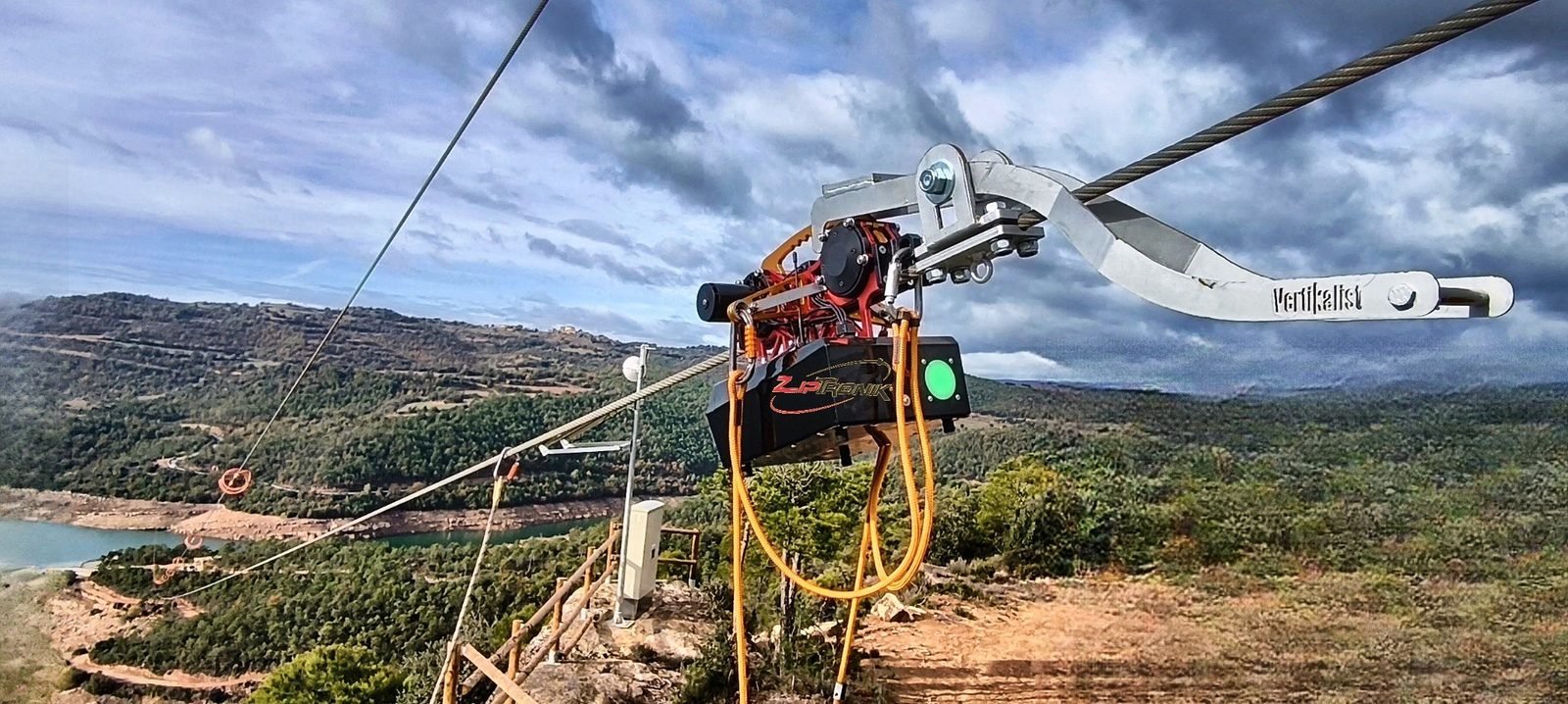
Earlier ZipTronik trolley with energy recovery installed on a zipline cable above a valley and reservoir

An earlier ZipTronik trolley with energy recovery, installed on an operating zipline.

OxIron combines both routes in one carriage, cumulative and/or regenerative, and adds the controlled speed range and payload needed to run more than a return trip.

Applications

One carriage, three uses

Passenger transport

Lines where riders are carried with controlled speed, and where the carriage returns to the start under its own power.

Events

Temporary and specific installations where setup time, speed control and visual integration matter as much as the ride.

Load carrying

Cable transport of equipment and loads within the rated weight, for sites where access is difficult or handling is costly.


Why the operating model changes

A trolley that controls its own speed and drives back on its own changes what has to be built around it. Fewer trolleys are needed for the same rhythm, trolleys are no longer carried between stations, and staff stop mounting and removing them on the cable for every run.

✓
Speed and position tracked on every run
✓
Remote control and live operating information
✓
Return of light equipment such as helmets and harnesses
✓
Traffic management on single-carriage installations
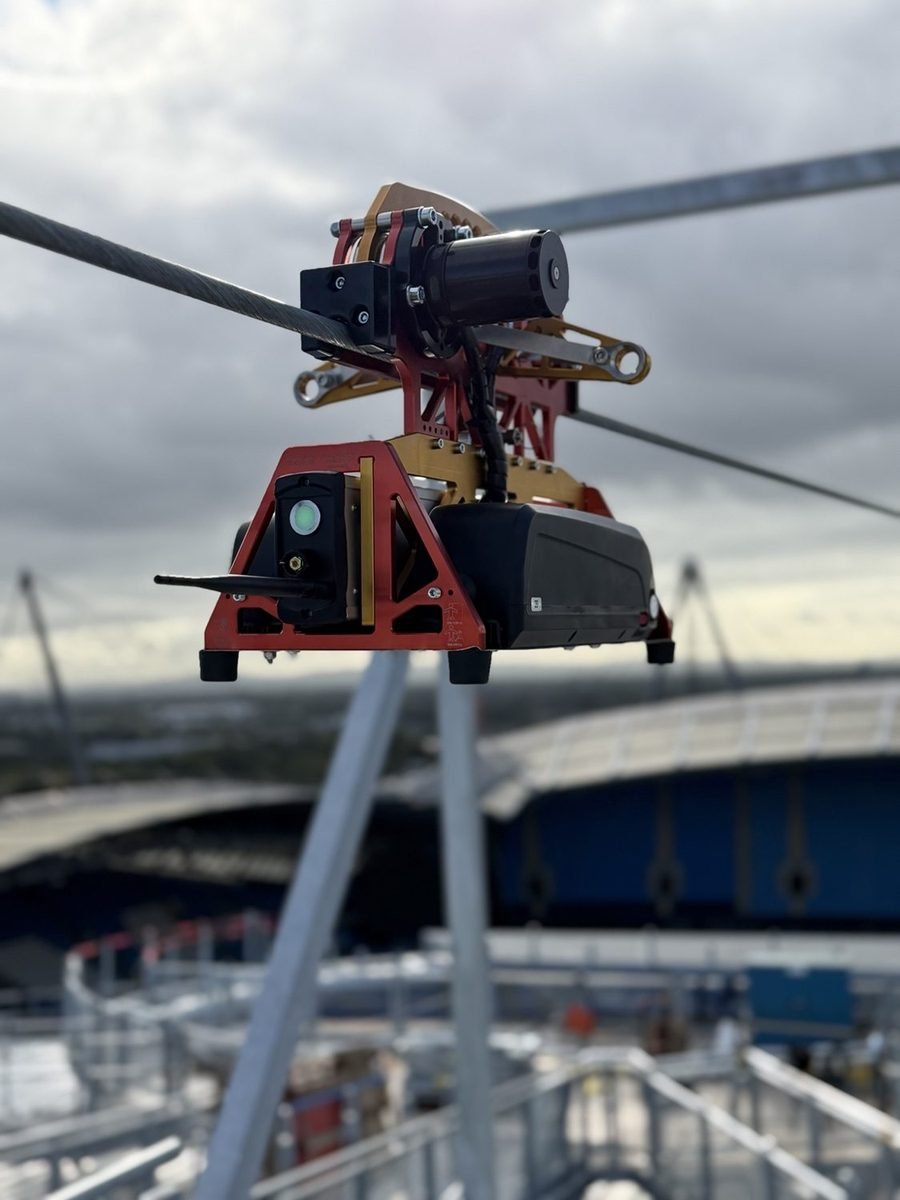
OxIron trolley hanging on a steel cable with its sensor and antenna visible, stadium structure in the background

OxIron on the cable, with its antenna and front sensor.

Safety and lifecycle

Less handling, more control

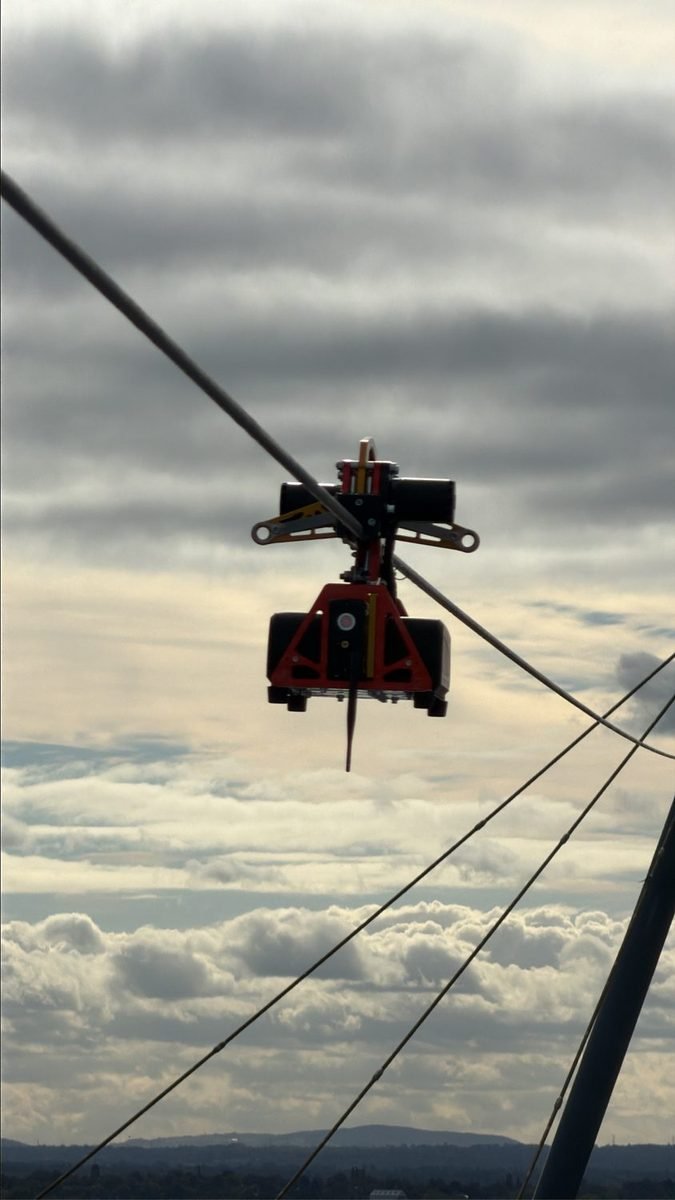
OxIron trolley travelling along a cable high above a stadium roof against a cloudy sky

OxIron in travel, high above the stadium roof.

Operational safety

✓
Descent speed managed electrically and mechanically, depending on the model.
✓
No transport of trolleys between stations during operation.
✓
Fewer mounting and removal operations on the cable.
✓
Automated cycles with speed and position data.

Maintenance cycle

ZipTronik trolleys are sold with a first warranty cycle of 12 months or 6,000 km, whichever comes first, covering operator training, wear parts, trolley exchange after a critical failure and remote assistance, renewable annually. Discuss how this fits your inspection regime in our lifecycle management service.

StandardsSkywalker engineers zipline designs to EN 15567-1 and EN 15567-2, with the certification path agreed with the independent inspection body (e.g. TÜV) before ground is broken. Certification applies per installation.
Fit assessment

Is your line a candidate for OxIron?

The carriage specification is the starting point, not the answer. A 20° climb rating or a 130 kg payload only matters once the line profile shows where the steepest section is, what the rider weight range is and how the arrival zone is built.

As ZipTronik's worldwide implementation partner, Skywalker assesses new and existing lines for ZipTronik trolleys. Our zipline design and engineering team models the cable profile, tower heights and sag, then checks it against the carriage's operating envelope before any configuration is proposed.

What we need for a first assessment

  • Line length and drop, or start and end coordinates
  • Average and maximum slope, sag and ground clearance
  • Departure and arrival geometry, and whether the line is visible end to end
  • Rider weight range, and what should travel back up: nothing, equipment, or passengers
  • Number of parallel lines and the throughput you are targeting
  • Season, operating team and any existing trolleys or brakes to be replaced
Frequently asked questions

Frequently Asked Questions

What is the OxIron trolley?

OxIron is the new mechatronic carriage in the ZipTronik range. Skywalker is ZipTronik's worldwide implementation partner. It is designed for passenger transport, events and load carrying, with controlled speed and manual or automatic control.

How much does OxIron weigh and carry?

According to the manufacturer, the OxIron carriage weighs 12.2 kg without its battery and carries up to 130 kg. The payload allowed on a specific line, especially uphill, is confirmed on the line profile.

What speed range does OxIron control?

ZipTronik publishes a controlled speed range of 5 to 120 km/h for OxIron. The maximum speed used on an installation is set by the line profile, the arrival zone and the applicable design limits, not by the carriage rating.

Can OxIron climb back up a zipline?

Yes. OxIron is rated to climb slopes of up to 20°. Its energy is cumulative and/or regenerative, so it can use stored battery energy and, where the line allows, energy recovered during descent and braking.

How is OxIron different from earlier ZipTronik trolleys?

Earlier ZipTronik trolleys were developed mainly to automate the return on ziplines, using energy recovery or interchangeable batteries. OxIron is positioned as a multi-purpose platform for passengers, events and loads, with programmable travel scenarios and manual or automatic control.

✓ Lines engineered to EN 15567-1 and EN 15567-2 ✓ Profile assessment before configuration ✓ OxIron designed and built in France ✓ Certification path agreed with the inspection body

Check OxIron against your line

Share the length, drop and operating goals of your new or existing line. We check the profile against the OxIron operating envelope and tell you which configuration fits, and what the line study needs to confirm.

Related reading

More on zipline technology

Product Ziplines & Zipwires

Cable grades, span configurations and throughput planning for commercial zipline installations.

Product Bi-Directional Zipline Trolleys

Return-trip zipline technology that eliminates walk-back queues and increases hourly capacity.

Product ZipCoaster — Rollercoaster Zipline

A seated, track-guided zipline engineered for resort-scale throughput and sustained guest excitement.

Product category Thrill Adventures — Full Range

ZipCoaster, free-fall devices, adventure towers and the complete Skywalker thrill attraction lineup.

Product Zipline Brake Systems

Passive and active braking options matched to terrain profile, cable length and rider weight range.

Service Zipline Design & Engineering

What an engineered zipline specification covers — and why site-specific design protects your permit and insurance position.

Shop Order: Zipline Braking Systems

Certified zipline brakes for new installations and replacement orders.

Shop Order: Zipline Trolleys

Compatible trolley sets for standard and bi-directional zipline configurations.

Shop Order: Zipline Harnesses

EN 12277-compliant harness range for guest-facing zipline operations.

Turnkey planning Build Your Park

Planning a full destination with multiple zipline attractions? The Skywalker turnkey process starts with a fixed-price feasibility study.