
• 1.jpg
  • 2.jpg
  • 3.jpg
  • 4.jpg
  • 5.jpg
  • 6.jpg
  • 7.jpg
  • 042A8449-LowRes.jpg
  • inclusive-climbing.jpg
  • JULY-24-071.jpg
  • JULY-24-079.jpg
  • RVR_zipline-06.jpg
Compare low ropes vs high ropes cost and find the best fit for your budget. Master your ropes course cost and optimize your capital expenditure right now!
◆ Adventure Business · Cost & ROI

The True Cost of Building a Commercial Ropes Course

Understanding the true ropes course capital expenditure (CapEx) is the most critical step before breaking ground on your aerial adventure project. Operators must account for everything from initial design studies to long-term maintenance to ensure a profitable venture and maximize adventure park investment.

AI Overview

Key takeaways

Total build pricing depends heavily on size, element count, and structural foundations (trees vs. steel poles).
High-throughput designs utilizing continuous belay systems drastically reduce staffing requirements and accelerate ROI.
Soft costs, including mandatory site assessments, geotechnical surveys, and certified engineering blueprints, are non-negotiable.
Operators must reserve budget for hidden operational expenses: annual inspections, liability insurance, and staff rescue training.
Financial Planning

Core variables driving your pricing

Every commercial build is unique, making the final budget highly dependent on your specific location and operational goals. The final price to build high ropes courses hinges on the size, element count, and the type of support structure used.

Facilities built on artificial steel poles generally require a higher initial investment than those utilizing existing healthy trees in high-wire forest parks. Building indoors also shifts your budget parameters significantly, as these courses utilize existing roof structures rather than heavy ground foundations.

Business Model

Calculating course ROI

A successful adventure park investment relies on balancing upfront construction fees with projected daily visitor capacity.

High-throughput designs featuring continuous belay systems allow you to operate with fewer staff members. This optimized logistics approach ensures a faster return on investment over the lifespan of the facility.
Park Design

Low ropes vs. high altitude costs

Your target demographic dictates the height and complexity of the challenges you install. Low ropes courses are significantly cheaper because they operate just a few feet off the ground and do not require expensive personal protective equipment. High-altitude installations demand robust fall protection systems, specialized hardware, and extensive structural engineering.
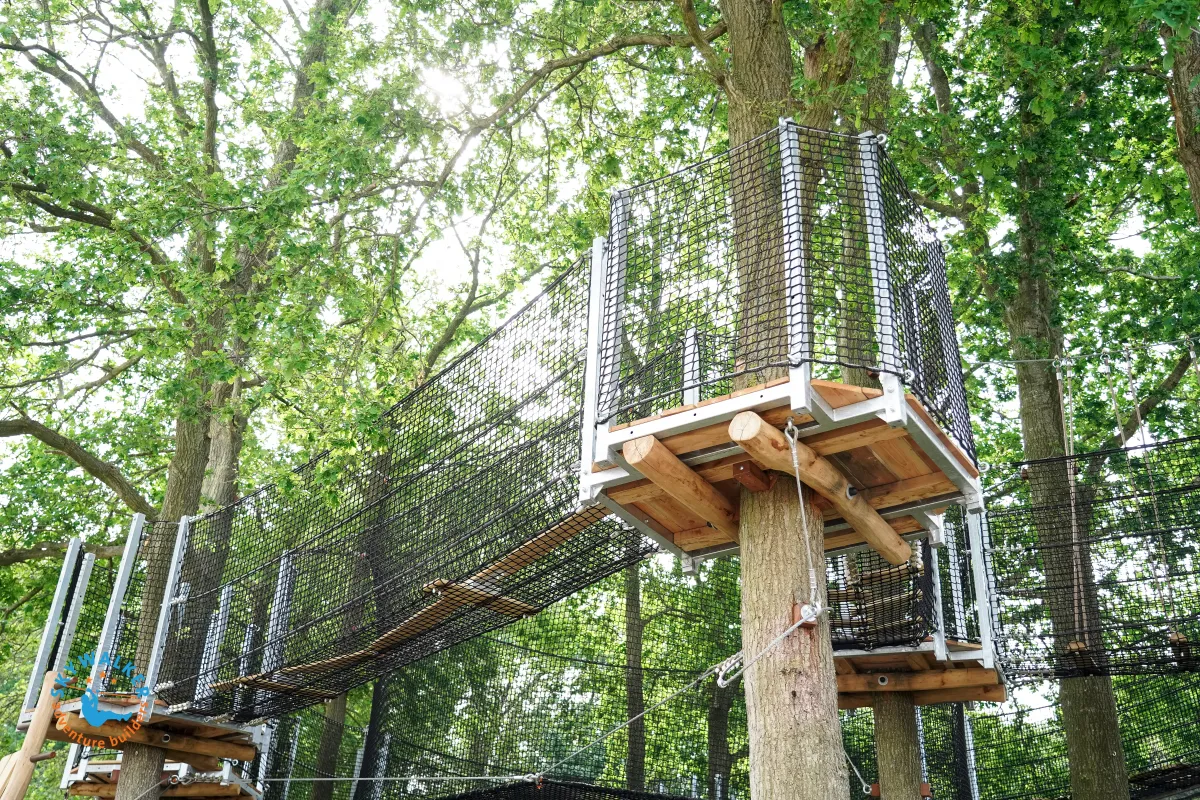
A high-capacity Net Adventure course suspended in a forest environment, illustrating a belay-free investment model.

Alternatively, structures like a net adventure provide completely belay-free, high-capacity zones that change your standard financial model.

Pre-Construction

Soft costs: Permitting & site feasibility

Before any physical building begins, operators must secure the proper site plans and local approvals. If you are building in a forest, a professional arboricultural assessment is mandatory to ensure tree health and structural viability.

You must also budget for geotechnical surveys to determine soil stability for foundations and guy lines. These initial studies mitigate catastrophic risks and prevent costly structural failures later on in the build.

Compliance

Design & engineering blueprints

You cannot legally operate without a certified technical dossier and structural strength calculations. The design and architecture phase dictates the turnkey installation strategy, detailing the exact hardware, pole sizes, and route logistics needed.

Specialized attractions require precise zipline design engineering to guarantee safe arrival speeds and strict compliance.

Construction Phase

Hard costs: Materials and safety hardware

The physical construction of the park consumes the largest portion of your overall budget. Your choice of materials directly impacts the longevity and maintenance requirements of the facility.

  • Structural Materials: High-grade galvanized steel and environmentally treated timber poles ensure your park withstands severe weather and high traffic.
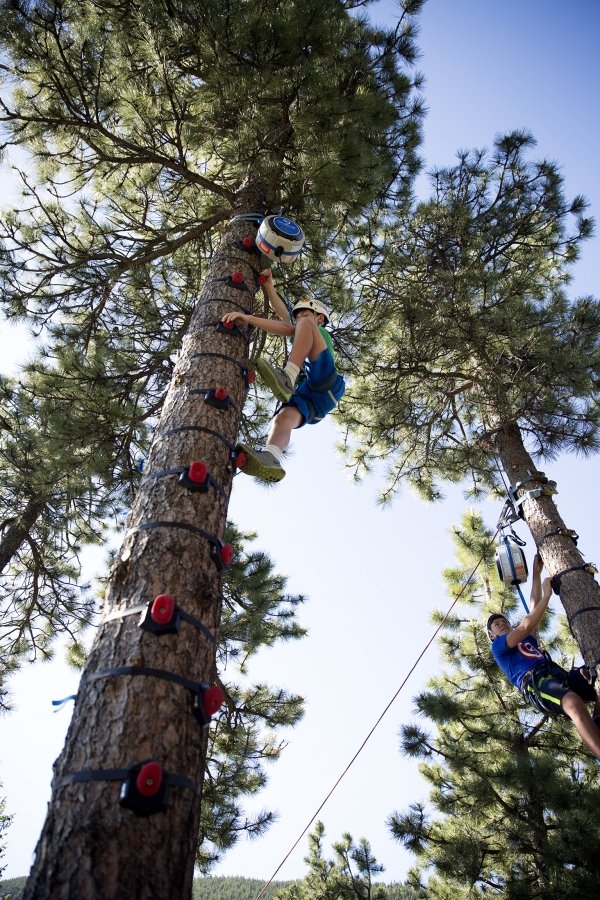
  • Safety Systems: Modern commercial parks rely heavily on advanced continuous belays or auto belay systems to maximize safety and throughput.
  • Specialized Hardware: Ziplines require premium safety hardware like magnetic trolleys and automatic brakes, while towers may incorporate free-fall devices.
Note Professional turnkey installation teams will manage the heavy machinery, groundwork, and complex rigging required to build the structure safely, which must be factored into your baseline CapEx.
Operational Expenditure

Hidden costs: Maintenance, training & insurance

The total cost of ownership extends far beyond the grand opening day. Operators must set aside a reliable contingency budget for ongoing operational demands. Failing to account for these recurring operational costs is a common pitfall that ruins profit margins.

Routine Structural Upkeep

Reserve roughly four to five percent of your initial project cost annually to cover maintenance and major upgrades, including mandatory annual safety inspections.

Equipment Replacement

Commercial harnesses, lanyards, and custom trolleys must be replaced entirely every few years depending on the manufacturer's lifespan regulations and daily wear and tear.

Staff Certifications

You must continuously invest in expert rescue and operational training to maintain strict safety compliance and ensure incident readiness.

Liability Insurance

Premium costs fluctuate wildly based on your location, overall safety record, and total daily visitor volume. Robust safety systems help control these ongoing fees.

Expert Answers

Frequently asked questions

How much does it cost to build a high ropes course?

The overall ropes course cost depends heavily on the number of elements, safety systems, and infrastructure type. A commercial setup can range anywhere from $150,000 to over $500,000 for a fully engineered turnkey installation. Always budget for soft costs like design and engineering before breaking ground.

What is the ROI for an adventure park?

A well-designed facility can achieve a complete return on investment within two to four years of operation. Profitability relies on high visitor throughput, efficient staff logistics, and strong secondary revenue streams like food and merchandise.

How much does liability insurance cost for a ropes course?

Insurance premiums vary based on your jurisdiction, safety record, and total visitor capacity. Operating with advanced continuous belay systems and certified staff can help lower your annual premiums. Consult with a specialized adventure recreation broker to get accurate local estimates.

What are the hidden costs of ropes course construction?

Operators often overlook the expenses of mandatory annual safety inspections and ongoing staff rescue training. You must also calculate the ropes course cost for replacing consumable safety gear like harnesses and lanyards every few years. Setting aside an annual maintenance budget is critical for long-term survival.

Is it cheaper to build a ropes course in trees or on poles?

Utilizing existing healthy trees is generally cheaper because it eliminates the need for deep concrete foundations and heavy steel poles. However, building on artificial poles offers total design freedom and eliminates the cost of a mandatory arboricultural assessment. Evaluate your terrain carefully to see which option offers the best long-term value.

Fixed-price feasibility studies EN 15567 compliant engineering Transparent lifecycle projections

Ready to start your project?

Our consultancy team will assess your site, define a concept, and produce a fixed-price proposal — with the feasibility fee credited back to construction.

Related reading

Explore the adventure business

Turnkey planning Build Your Park

The full Skywalker process: from fixed-price feasibility study through design, engineering and opening day.

Service Consultancy — Feasibility & Concept

What a Skywalker feasibility study covers — and how the fee credits back into construction cost.

Service Design & Architecture

How Skywalker translates a site concept into engineered construction drawings and permit-ready specifications.

Service Concepting & Theming

Turning a site brief and investor vision into a coherent, themed guest experience with commercial logic.

Service HRM & Operations Planning

Staffing structures, hiring frameworks and operating model design for adventure parks at scale.

Product AirCruizer Cable Bicycle

An aerial cable bicycle that adds a low-intensity, family-accessible revenue stream to any adventure destination.

Product Net Adventure

Multi-level suspended net structures — high dwell time, low staffing cost, strong ROI for family parks.

Product Ultimate Adventure Tower

A vertical multi-discipline anchor attraction that drives park-wide footfall and upsell across adjacent attractions.

Service Zipline Design & Engineering

Engineered zipline specifications — why site-specific design protects your permit, insurance and long-term operating margin.

Products overview All Products — Attraction Range

Browse the full Skywalker product range to plan your park's attraction mix and revenue model.