



• 1.jpg
  • 2.jpg
  • 3.jpg
  • 4.jpg
  • 5.jpg
  • 6.jpg
  • 7.jpg
  • 042A8449-LowRes.jpg
  • inclusive-climbing.jpg
  • JULY-24-071.jpg
  • JULY-24-079.jpg
  • RVR_zipline-06.jpg
Turn a standard visitor visit into a highly profitable day. Maximize your adventure park revenue with proven upselling and dwell time tactics.
◆ Business Strategy · Adventure Parks

Maximizing adventure park revenue through secondary spend

Driving consistent adventure park revenue requires looking far beyond the initial admission ticket. By strategically focusing on secondary spend, operators can transform standard leisure destinations into highly profitable business ventures. Mastering the integration of food, beverage, and retail guarantees maximum return on every guest.

Executive summary

Key takeaways

Industry benchmarks target 30% to 40% of total income from secondary spend.
A four-hour visit practically guarantees a high-margin food and beverage purchase.
Optimized F&B terrace sightlines encourage non-participating family members to linger and spend.
Retail items placed at harnessing exits effectively capture post-activity adrenaline purchases.
Guest behaviour

The psychology of dwell time and hunger

Understanding guest behavior is the foundation of profit optimization in any outdoor facility. The longer visitors remain on your property, the more likely they are to engage in secondary transactions. Keeping guests engaged directly dictates your overall financial performance.

Why a 4-hour stay guarantees a meal purchase

Physical exertion on ropes courses naturally depletes energy, triggering a biological need to refuel. Once a visit extends past the three-hour mark, families shift from active participants to captive dining consumers. A strategically timed four-hour visit practically ensures a high-margin food and beverage purchase.

Boosting revenue with food and beverage

Industry data reveals a healthy benchmark ratio is generating 30% to 40% of total income from food, beverage, and retail. The primary attraction simply gets guests through the door, while the F&B operations generate the true wealth. Optimizing menu pricing and service speed captures this essential revenue. Proper planning for this revenue stream should begin during your initial business consultancy and feasibility stage.

Infrastructure planning

Strategic placement of the F&B terrace
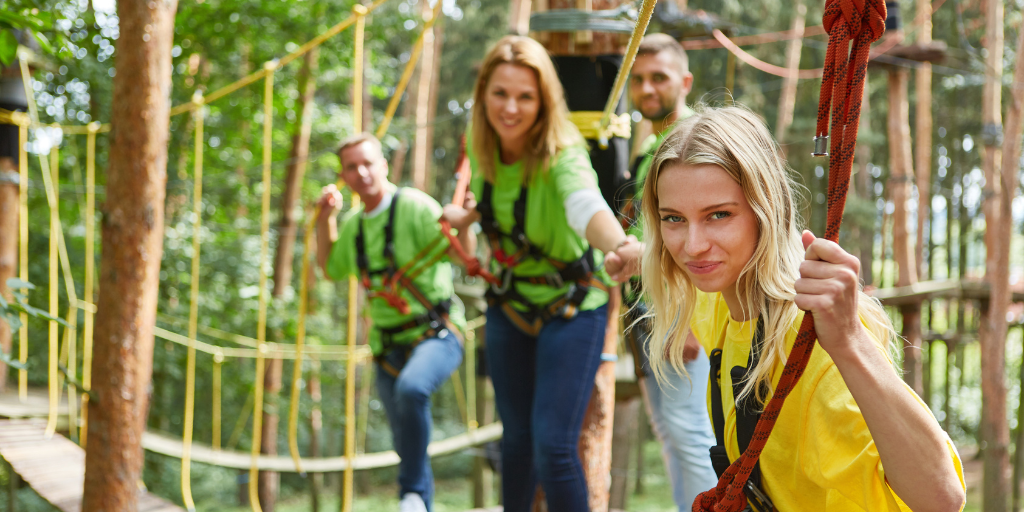
Grow your profit margins beyond initial ticket sales. Read our guide to maximizing adventure park revenue through clever food and beverage integration.

Strategic F&B terraces provide rest areas that convert non-participating guests into consumers.

Facility layout dictates how easily money flows from the visitor to your business. A well-designed rest area acts as a natural funnel for passive spending. Proper placement through expert design and architecture eliminates friction between the tired guest and the point of sale.

Designing sightlines for maximum engagement

Parents will gladly purchase multiple premium coffees if they have a comfortable, shaded seat with a clear view of their children. Positioning your food and beverage terrace directly facing the main activity zones guarantees prolonged seating. This extended comfort directly translates to repeated secondary transactions throughout the afternoon.

Key tactics for secondary spend Provide shaded seating, ensure the point of sale is highly visible from active zones, and offer quick-service snacks that require minimal preparation time to keep lines moving fast.
Beyond food and beverage

Upselling with merchandise and premium add-ons

Beyond food, retail offers a massive opportunity for profit margin expansion. Guests want tangible memories of their physical accomplishments. Offering exclusive, high-quality merchandise transforms a fleeting experience into a lasting brand connection.

Strategies for upselling merchandise

Place retail items exactly where guests exit the equipment harnessing area, capturing them while adrenaline is high. Branded apparel, protective gloves, and reusable water bottles serve as both practical necessities and premium souvenirs. Bundling these items with a meal voucher creates an irresistible upsell package.

Implementing strategic concepting and layout and psychological tactics ensures your outdoor facility operates at peak financial efficiency. Capturing more secondary spend secures long-term profitability. Keep your guests comfortable, engaged, and well-fed to maximize the financial yield of every single visit.

Knowledge base

Frequently asked questions

What is a good ratio of ticket sales to secondary spend?

A highly profitable facility targets a secondary spend ratio of 30% to 40% compared to primary ticket sales. Achieving this balance ensures your adventure park revenue is not solely dependent on admission numbers. Relying heavily on ticket sales leaves significant profit potential untapped.

How do you increase dwell time at an adventure park?

Providing ample shaded seating, clean restrooms, and diverse food options naturally extends visitor dwell time. When non-participating family members are comfortable, the entire group stays longer. This prolonged engagement provides a steady foundation for increasing overall adventure park revenue.

What food options sell best at outdoor leisure destinations?

High-margin, quick-service items like gourmet pizza, premium coffee, and artisanal ice cream perform exceptionally well. These items require minimal kitchen staff while satisfying the heavy cravings caused by physical activity. Faster service directly correlates to a higher volume of daily transactions.

How does park layout affect adventure park revenue?

A centralized layout forces guests to walk past your food and retail counters multiple times during their visit. Strategic choke points and well-placed observation decks create passive purchasing opportunities. Optimized facility sightlines are critical for capturing spontaneous purchases.

Why is secondary spend important for recreation facilities?

Primary ticket sales cover operational costs, but secondary spend drives the actual profit margin. Food, beverage, and retail items inherently possess much higher markups than admission fees. Maximizing this operational layer creates a more resilient and lucrative business model.

ERCA Certified Builder EN 15567 Compliant Fixed-Price Construction

Ready to start your project?

Our consultancy team will assess your site, define a concept, and produce a fixed-price proposal — with the feasibility fee credited back to construction.

Related reading

Explore the adventure business

Turnkey planning Build Your Park

The full Skywalker process: from fixed-price feasibility study through design, engineering and opening day.

Service Consultancy — Feasibility & Concept

What a Skywalker feasibility study covers — and how the fee credits back into construction cost.

Service Design & Architecture

How Skywalker translates a site concept into engineered construction drawings and permit-ready specifications.

Service Concepting & Theming

Turning a site brief and investor vision into a coherent, themed guest experience with commercial logic.

Service HRM & Operations Planning

Staffing structures, hiring frameworks and operating model design for adventure parks at scale.

Product AirCruizer Cable Bicycle

An aerial cable bicycle that adds a low-intensity, family-accessible revenue stream to any adventure destination.

Product Net Adventure

Multi-level suspended net structures — high dwell time, low staffing cost, strong ROI for family parks.

Product Ultimate Adventure Tower

A vertical multi-discipline anchor attraction that drives park-wide footfall and upsell across adjacent attractions.

Service Zipline Design & Engineering

Engineered zipline specifications — why site-specific design protects your permit, insurance and long-term operating margin.

Products overview All Products — Attraction Range

Browse the full Skywalker product range to plan your park's attraction mix and revenue model.