




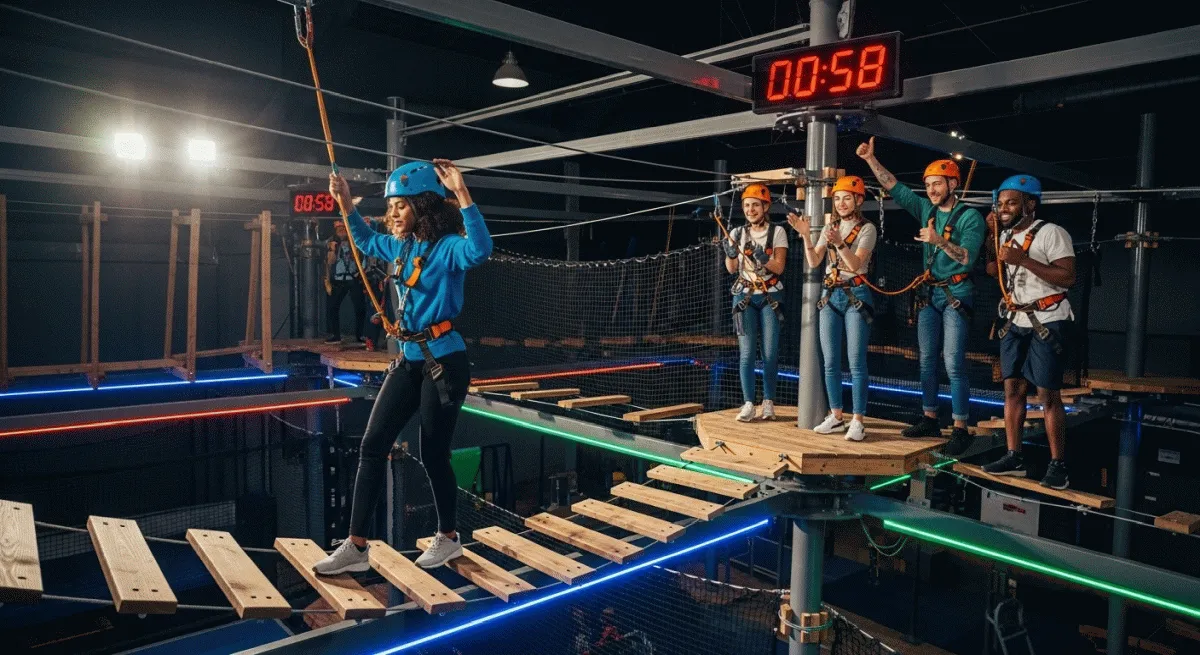
• 1.jpg
  • 2.jpg
  • 3.jpg
  • 4.jpg
  • 5.jpg
  • 6.jpg
  • 7.jpg
  • 042A8449-LowRes.jpg
  • inclusive-climbing.jpg
  • JULY-24-071.jpg
  • JULY-24-079.jpg
  • RVR_zipline-06.jpg
Never break ground without an adventure park feasibility study. Read our guide to mitigating risk and modeling return on investment for new developments.
◆ Feasibility Studies · Adventure Business

The Adventure Park Feasibility Study

An adventure park feasibility study is the critical first step to guarantee your project is both physically viable and financially sound. Before committing massive capital to a new site, professional operators must secure their intellectual property and assess hidden risks. Starting with hard data separates profitable recreation destinations from costly development failures.

TL;DR Summary

Key Takeaways

M-NDAs are mandatory to protect proprietary concepts and operational blueprints during early-stage planning.
Topographical and zoning checks expose hidden structural and regulatory roadblocks before committing capital.
Accurate capital expenditure modeling guarantees realistic return on investment (ROI) projections for stakeholders.
Feasibility data provides the secure, data-backed foundation required to authorize a master architectural plan.
Legal Protection

Step 1 of Adventure Park Construction

Establishing legal protection is the necessary starting point for any commercial build. Before sharing proprietary site data or financial goals, executing a Mutual Non-Disclosure Agreement (M-NDA) guarantees that both the developer and the builder are legally protected. This mutual trust allows operators to share sensitive operational blueprints without fear of intellectual property theft. Securing this legal baseline is mandatory before moving into the extensive adventure park construction process.

An M-NDA specifically locks down your unique park concepts, visitor flow designs, and target market analyses. For developers in highly competitive markets, leaked plans can ruin early mover advantages.

Once legal safeguards are active, the adventure resort planning phase officially begins. Builders and developers collaborate openly to align the creative vision with harsh physical and financial realities. This transparent exchange is the only way to build an accurate capital expenditure model alongside professional consultancy services.
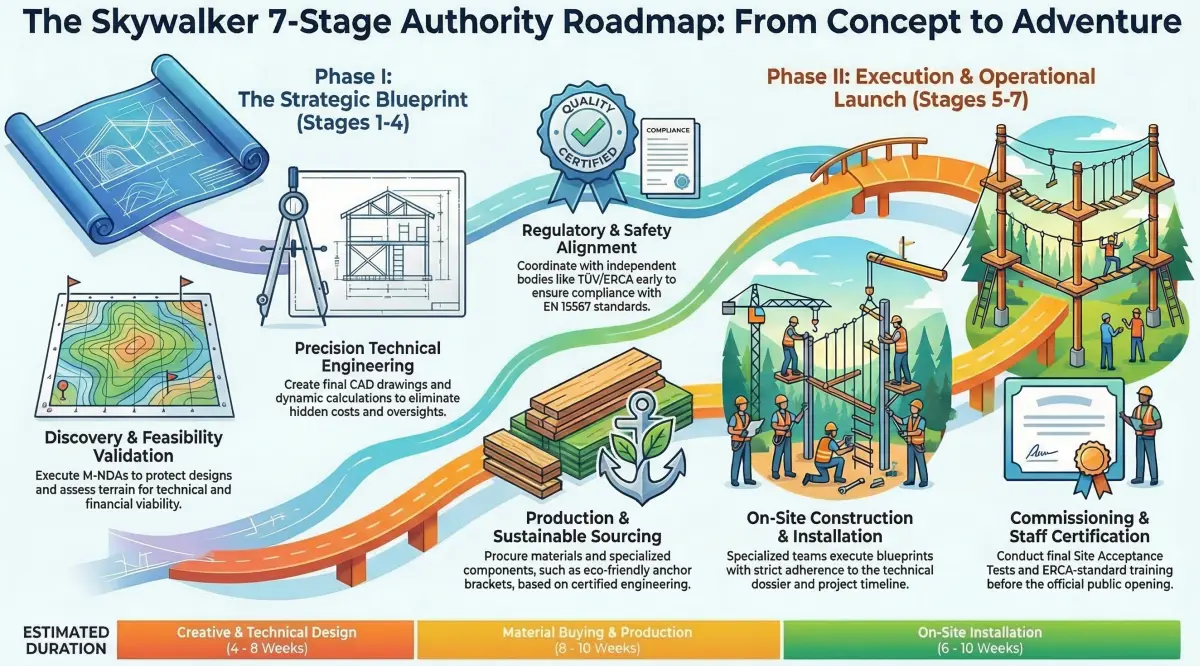
The 7-Stage Adventure Park Construction Roadmap detailing the progression from feasibility to operations.

Secure your data and your budget with an M-NDA and an adventure park feasibility study to confidently map your commercial build.

Site Assessment

Deconstructing the Feasibility Study

This phase is not about dreaming; it is about identifying structural and regulatory roadblocks before they drain your budget. A proper evaluation inspects every square meter of the proposed site alongside local municipal codes based on extensive industry experience. Exposing hidden site costs early is the primary goal of this rigorous investigation.

Topographical surveys & zoning

Understanding the exact physical contours of your land dictates where infrastructure can safely go. Topographical mapping reveals severe elevation changes, soil stability issues, and natural water flows that impact foundation costs. Simultaneously, rigorous zoning checks ensure your design and architecture plans legally comply with local height and environmental restrictions.

Budget and ROI projections

Financial viability relies on accurate capital expenditure modeling and realistic visitor metrics. Planners calculate the exact costs of materials, labor, and necessary infrastructure to provide a baseline budget. By contrasting these costs against projected ticket sales and operational efficiency, operators receive clear return on investment projections.

Operational confidentiality

Sharing detailed financial projections without an M-NDA is a massive business risk. Your financial modeling is proprietary data that defines your operational edge in the recreation industry. Locking this data down ensures that builders use your numbers strictly to optimize your specific project scope.

Construction risk assessment

Every outdoor location carries unique environmental and logistical hazards that must be quantified. Detailed risk mitigation strategies outline everything from seasonal weather impacts to supply chain delays for specialized equipment. Identifying these threats during planning prevents catastrophic budget overruns later.

Common Questions

Frequently Asked Questions

What is an adventure park feasibility study?

An adventure park feasibility study is a comprehensive assessment that evaluates the physical, financial, and regulatory viability of a proposed site. It identifies hidden costs and provides accurate budget forecasts before any construction begins. This process ensures the development will generate a profitable return.

Why do developers need a mutual non-disclosure agreement?

An M-NDA protects your proprietary business strategies, unique park concepts, and financial data during early negotiations. It legally prevents construction partners from sharing your operational blueprints with competitors. Securing your intellectual property is vital before sharing sensitive location details.

What is included in an adventure resort planning phase?

This phase includes deep topographical evaluations, risk assessments, and strict capital expenditure modeling. Teams also conduct rigorous local zoning checks to ensure the desired structures are legally permitted. The ultimate output is a data-backed foundation for the master architectural plan.

How do topographical surveys impact adventure park development?

Topographical surveys map the exact elevation, soil quality, and natural features of your specific land parcel. Identifying poor soil or severe slopes early dictates where heavy infrastructure can safely and cost-effectively be built. Ignoring this step leads to massive, unforeseen foundation expenses.

What are typical initial budget and ROI projections?

Projections combine the total estimated build costs with anticipated annual visitor volume and operational overhead. An adventure park feasibility study delivers these metrics to show exactly when the project will break even. Accurate ROI modeling is required to secure funding from external investors or banks.

Fixed-price feasibility models EN 15567 Compliance Proprietary IP protection

Ready to start your project?

Our consultancy team will assess your site, define a concept, and produce a fixed-price proposal — with the feasibility fee credited back to construction.

Related reading

Explore the adventure business

Turnkey planning Build Your Park

The full Skywalker process: from fixed-price feasibility study through design, engineering and opening day.

Service Consultancy — Feasibility & Concept

What a Skywalker feasibility study covers — and how the fee credits back into construction cost.

Service Design & Architecture

How Skywalker translates a site concept into engineered construction drawings and permit-ready specifications.

Service Concepting & Theming

Turning a site brief and investor vision into a coherent, themed guest experience with commercial logic.

Service HRM & Operations Planning

Staffing structures, hiring frameworks and operating model design for adventure parks at scale.

Product AirCruizer Cable Bicycle

An aerial cable bicycle that adds a low-intensity, family-accessible revenue stream to any adventure destination.

Product Net Adventure

Multi-level suspended net structures — high dwell time, low staffing cost, strong ROI for family parks.

Product Ultimate Adventure Tower

A vertical multi-discipline anchor attraction that drives park-wide footfall and upsell across adjacent attractions.

Service Zipline Design & Engineering

Engineered zipline specifications — why site-specific design protects your permit, insurance and long-term operating margin.

Products overview All Products — Attraction Range

Browse the full Skywalker product range to plan your park's attraction mix and revenue model.