


How eddy-current braking works
Move a conductive metal, such as copper or aluminium, through a strong magnetic field and small circulating electric currents appear inside it: eddy currents. They create their own magnetic field that pushes against the movement. The energy of the motion turns into heat in the metal.
The same principle slows roller coasters and drop towers. On a zipline it is used in two different ways: in an end brake at the landing, which this article is about, and inside a magnetic braking trolley, which regulates speed along the line but does not stop the rider.
How a magnetic end brake stops the rider
A typical magnetic end brake system has a brake unit at the landing, a line running from that unit to a brake block on the cable, and the emergency arrest device behind it.
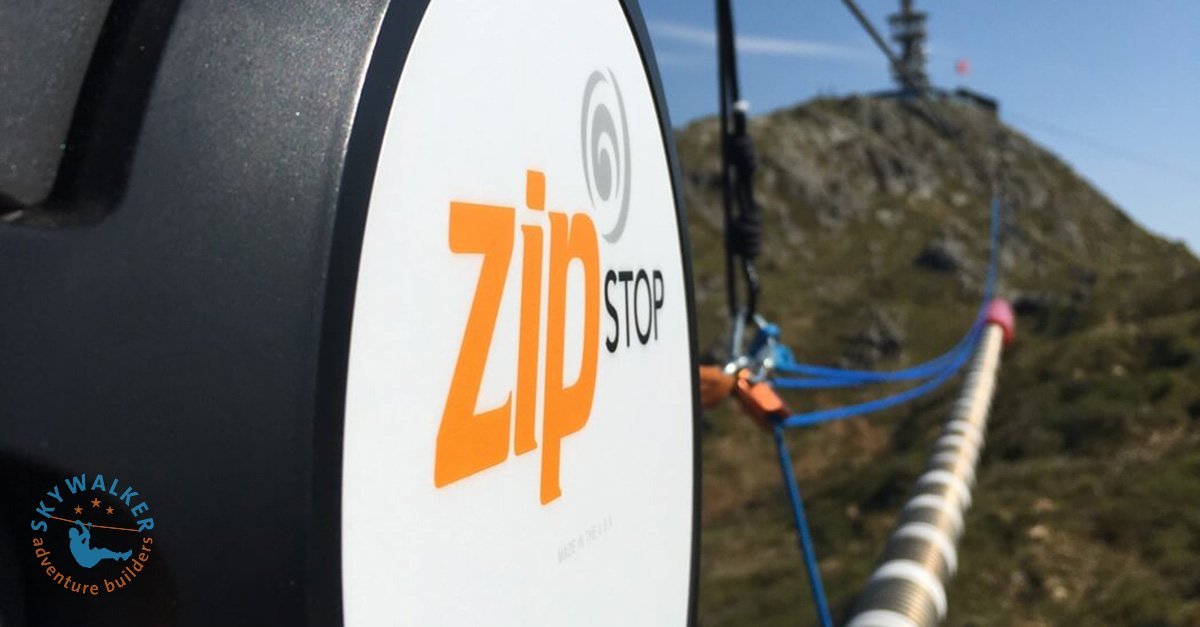
Where a magnetic end brake fits
A magnetic end brake suits most commercial ziplines where riders should not brake themselves. Whether it works on your line depends on the arrival speeds of your lightest and heaviest rider, in head- and tailwind, and on the space at the landing.