


• 1.jpg
  • 2.jpg
  • 3.jpg
  • 4.jpg
  • 5.jpg
  • 6.jpg
  • 7.jpg
  • 042A8449-LowRes.jpg
  • inclusive-climbing.jpg
  • JULY-24-071.jpg
  • JULY-24-079.jpg
  • RVR_zipline-06.jpg
Evaluate the pros and cons of continuous and smart ropes course belay systems. Make an informed decision to enhance participant autonomy and book more groups.

Selecting the right ropes course belay systems is the most critical operational decision you will make for your aerial adventure park. Your choice directly impacts participant safety, hourly throughput, and staffing requirements across your entire facility. Explore the differences between continuous and smart belays to determine the most profitable solution for your unique course design.

The evolution of ropes course safety equipment

Modern safety standards have transformed how operators manage risk at height.

Early aerial parks relied on traditional carabiners, leaving operators vulnerable to the severe risks of accidental participant unclipping. The industry quickly adapted by developing advanced ropes course belay systems that eliminate human error while improving the overall guest experience. Today, operators primarily choose between two dominant technologies: continuous tracking mechanisms and interlocking smart carabiners.

How continuous belay systems work

These mechanisms provide an uninterrupted connection from the start of the course to the finish.

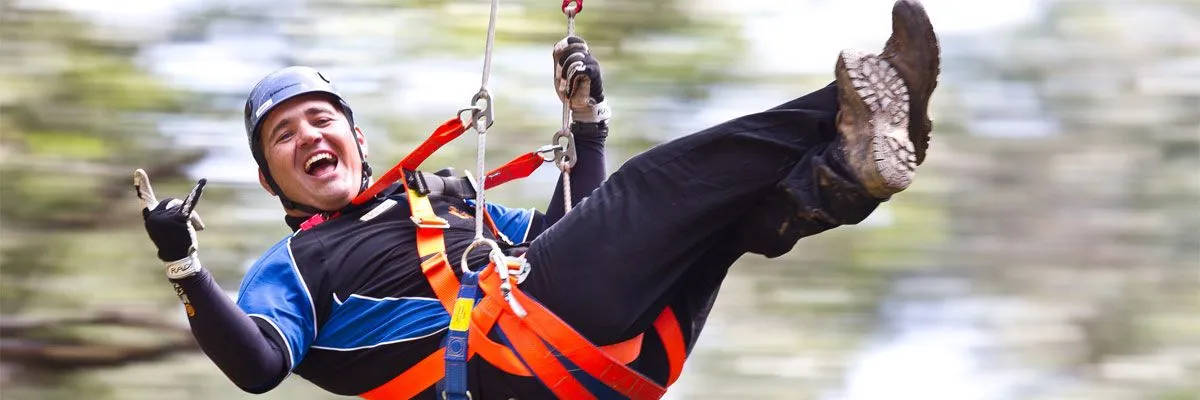
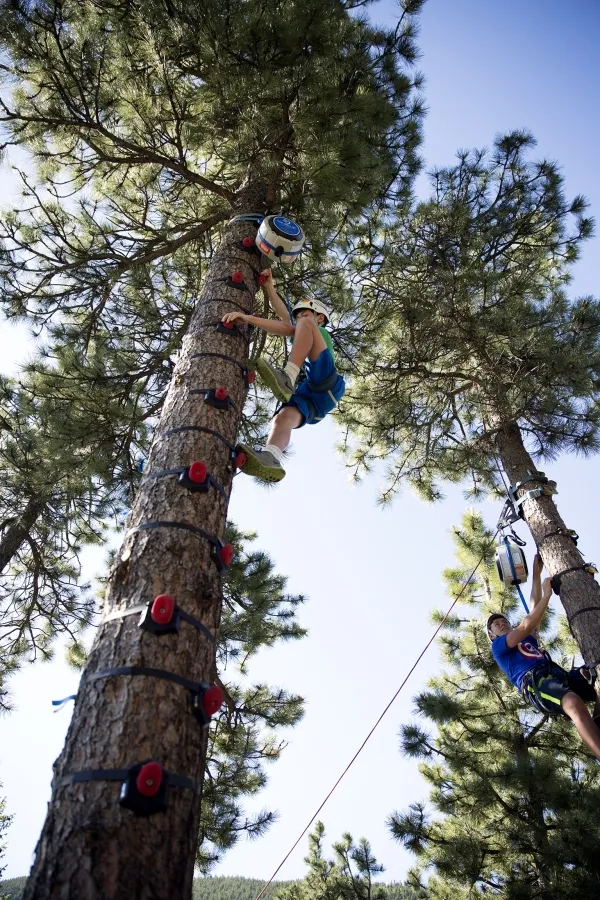
A continuous belay utilizes a specialized shuttle or trolley that glides smoothly along a fixed overhead tracking system or lifeline. Participants connect once at the beginning of the route and cannot physically detach themselves until they reach the designated exit point. This completely removes the risk of a participant disconnecting at height, offering absolute peace of mind for operators of high-wire forest parks.

Best ropes course belay systems for high throughput

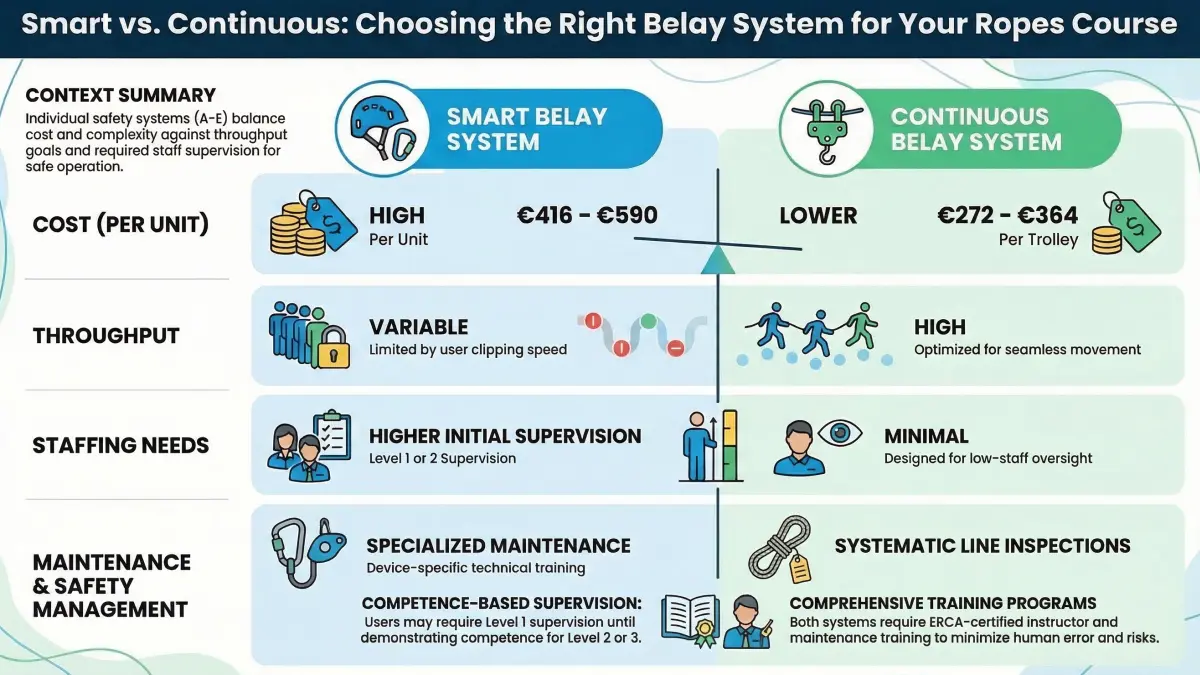
Because participants do not need to constantly clip and unclip at every platform, continuous systems naturally speed up the flow of traffic. This friction-free movement significantly increases your hourly throughput, allowing you to process more paying guests during peak operational hours. The primary advantages of this setup include:

  • Zero risk of accidental unclipping on your high ropes courses.
  • Faster progression for participants of all ages.
  • Streamlined briefing times since the mechanism is highly intuitive.

Are you upgrading your ropes course belay systems? Compare continuous setups and interlocking carabiners to find the perfect fit.

How smart belay systems work

These intelligent devices communicate with each other to guarantee one point of attachment.

Using a pair of interlocking carabiners, a smart belay ensures that if one carabiner is open, the other mechanically locks shut. This forces the user to interact with the lifeline at every element, preserving the authentic feeling of climbing while preventing complete detachment. It provides a highly engaging experience that prioritizes participant autonomy and active problem-solving.

Choosing between continuous belay and smart belay

Smart belays offer unique logistical benefits for complex park layouts where multiple routes intersect. They make it much easier for faster climbers to overtake slower participants at platforms, preventing frustrating bottlenecks on the course. The main benefits of an interlocking setup combined with intelligent course design and architecture include:

  • Active participant engagement with the safety equipment.
  • Flexible route design with easy overtaking capabilities.
  • Simpler operator rescue procedures due to removable clips.

Cost comparison and staffing requirements

Your choice of safety mechanism will directly dictate your long-term operational budget.

Continuous belay hardware often requires a higher upfront investment for the specialized belay channel and custom brackets. However, because the system is virtually foolproof, operators can safely run the course with fewer patrolling staff members. Conversely, smart belays have a lower initial infrastructure cost but demand more rigorous staff training and education to monitor participant autonomy and equipment usage.

Reducing staffing costs with continuous belay

By virtually eliminating the possibility of a mid-course disconnection, continuous systems drastically reduce the need for constant, close-proximity interventions. This allows operators to streamline their harness rack management and allocate staff to broader supervisory roles rather than direct oversight. Ultimately, investing in seamless ropes course belay systems yields a rapid return on investment through optimized labor distribution.

Selecting the ideal safety hardware requires balancing your desired visitor experience with your operational budget constraints. Whether you prioritize the high-volume efficiency of a continuous track or the engaging autonomy of interlocking carabiners, your choice will define your park's success. Upgrading to modern ropes course belay systems ultimately guarantees a safer, more profitable adventure for your entire facility.

Planning an Adventure project? Need expert advice on Adventure park design?

Get in touch today!

Frequently asked questions

What is the safest belay system for a ropes course?

Both modern ropes course belay systems are engineered to prevent fatal falls and meet strict industry safety standards. Continuous tracks offer the highest physical security by eliminating all human error from the clipping process. Smart interlocking carabiners are also incredibly safe but still require the user to actively manage their safety connections.

How does a continuous belay system work?

This hardware utilizes a specialized trolley that slides continuously along an uninterrupted overhead tracking system. Once a guide attaches the participant at the starting platform, the user cannot detach the trolley until they reach the ground. This creates a seamless, foolproof journey across the entire adventure park layout.

What is a smart belay system?

A smart belay consists of two interlocking carabiners that communicate mechanically with one another. If a climber unclips one carabiner to navigate past a tree bracket, the second carabiner locks securely onto the lifeline until the first is reattached. This ensures the participant is always anchored to the safety cable by at least one point.

Which belay system allows for the highest throughput?

Continuous ropes course belay systems naturally generate the highest hourly throughput for adventure operators. Because guests simply walk and slide their trolley without stopping to manipulate carabiners, traffic flows much faster. This reduction in physical bottlenecks allows you to maximize your daily ticket sales.

How do belay systems affect staffing costs?

Your chosen safety hardware heavily influences how many guides you need actively patrolling the course. Continuous tracks allow for reduced staffing requirements since participants cannot accidentally unclip themselves. Interlocking carabiner setups demand a slightly higher staff presence to monitor proper equipment usage and assist with complex transfers.