
• 1.jpg
  • 2.jpg
  • 3.jpg
  • 4.jpg
  • 5.jpg
  • 6.jpg
  • 7.jpg
  • 042A8449-LowRes.jpg
  • inclusive-climbing.jpg
  • JULY-24-071.jpg
  • JULY-24-079.jpg
  • RVR_zipline-06.jpg
Optimize your adventure resort concept design with multi-attraction aerial parks that capture every demographic.
◆ Strategy · Adventure Business

Multi-Attraction Aerial Parks: The Full-Day Blueprint

Investing in multi-attraction aerial parks is a proven way to turn a brief stopover into a profitable, full-day destination. Operators who move from a single activity to an integrated attraction mix can turn a 2-hour visit into a 4-to-6-hour day. This supports ROI through higher throughput and more secondary spending.

Executive Summary

Key takeaways for park operators

✓
Longer dwell times: layering attractions can extend a typical 2-hour visit to 4–6 hours.
✓
Broad Demographic Appeal: Layered zones capture everyone from toddlers to seniors, ensuring the family unit stays together.
✓
More secondary spend: longer stays run into meal times, which drives F&B revenue.
✓
Shared logistics: central safety and equipment hubs and overlapping safety corridors can reduce staffing needs.
Integrated Design

Designing for demographic synergy

A single attraction holds guests for roughly two hours before they leave to spend their money elsewhere. With a high-capacity mix of attractions, operators keep families engaged for most of the day. A good adventure resort concept design lets visitors move through layered zones that cater to all ages at the same time.

🧗

Low ropes for kids

Low-level obstacle courses close to the ground let younger children explore safely and keep parents with children of different ages together.

🕸️

Net adventures

Suspended net zones handle large volumes without harness briefings, creating an easy, high-energy play hub.

🎢

High-adrenaline zipcoasters

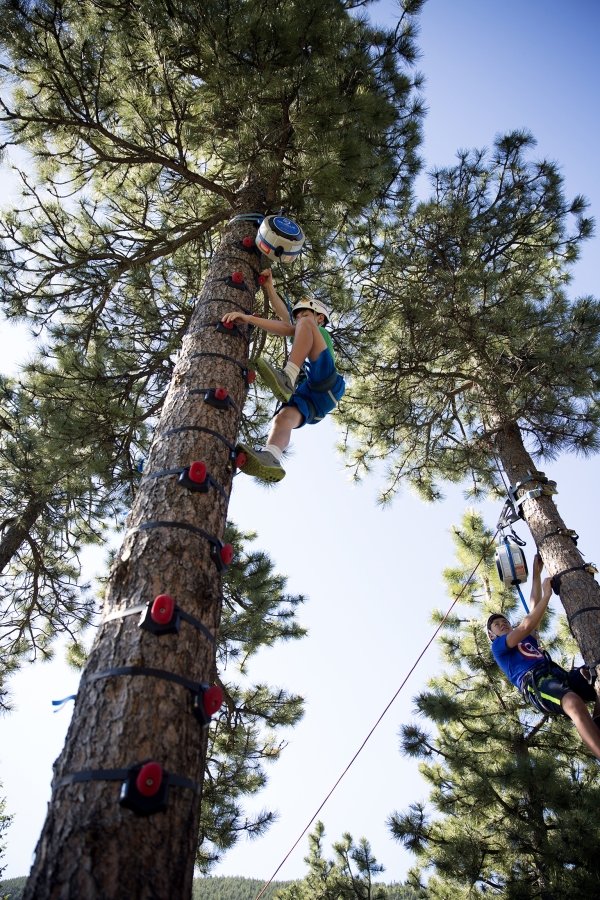
Attractions like the rollercoaster zipline draw young adults and spectators and are popular on social media.

Revenue Maximization

Capturing secondary spend

When a multi-attraction layout takes four to six hours to explore, visitors naturally use the on-site hospitality. Dining pavilions next to spectacular aerial elements invite spectators to sit and watch for longer. Guests should not have to leave the action to buy a meal — placing F&B where the high-adrenaline and ground-level zones meet is one of the most effective ways to raise per-capita revenue.
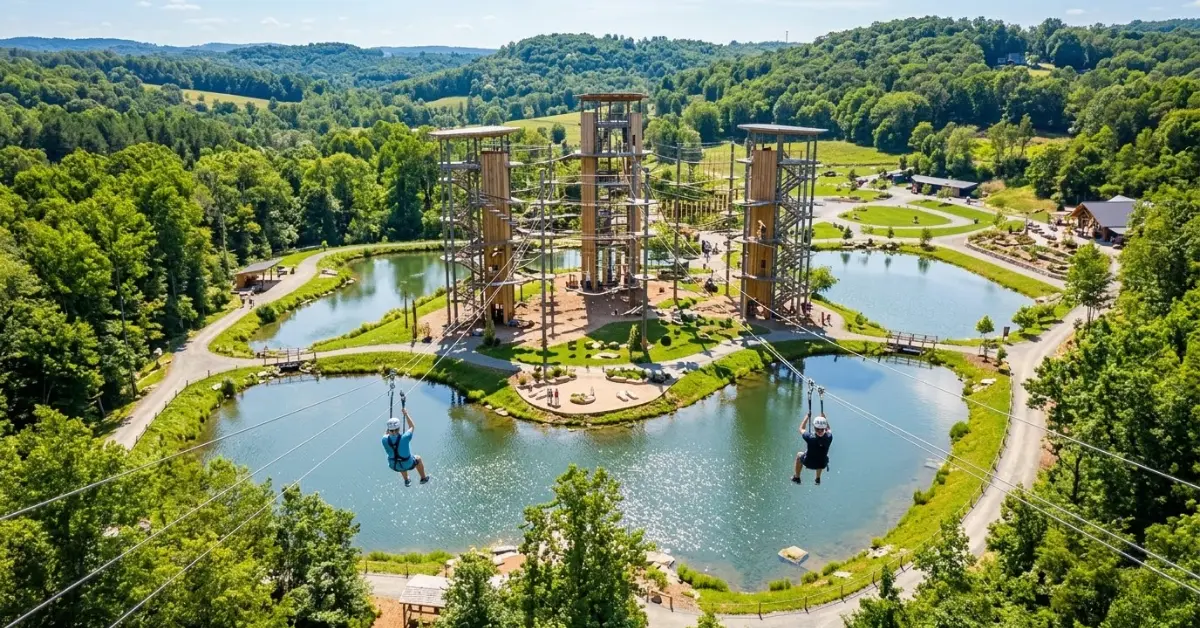
Multi-attraction master planning concept showing hospitality zones integrated with aerial activities

Strategic spatial planning integrates F&B to support ROI and longer dwell times.

Tip: give spectators comfortable viewing points close to the action — that is where many refreshment purchases happen.
Example: a 12,000 m² park

Infrastructure and operational flow

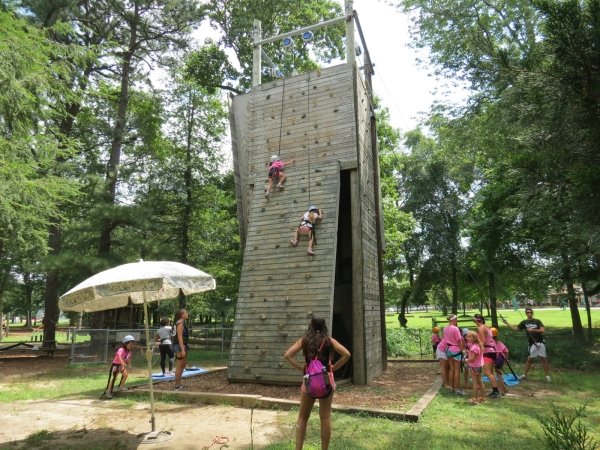
A large plot lets high ropes, suspended nets and gravity rides be woven together. With heavy infrastructure such as ticketing and dining on the perimeter, operators preserve the natural setting while handling 300+ visitors a day.

Centralizing safety hubs

Integrated layouts need careful master planning to avoid bottlenecks. Central equipment hubs reduce the space needed for harness storage and speed up check-in, which allows staff deployment where fewer instructors monitor several lines.

Structural advantages

  • Streamlined safety briefings for diverse groups
  • Reduced payroll via overlapping safety corridors
  • Natural visitor flow toward commercial hubs
Knowledge Base

Frequently asked questions

How do multi-attraction aerial parks increase dwell time?

By offering a variety of distinct activities, guests have reasons to stay for a full day. Families move from low-impact nets to high-speed rides, naturally extending their visit and preventing quick turnover.

What is the ideal footprint for an adventure resort concept design?

An integrated multi-attraction layout typically needs from about 3,400 m² (category B) to 12,400 m² (category C). That accommodates play zones, safety corridors and hospitality infrastructure while preserving natural elements.

How does a multi-attraction layout improve operational efficiency?

Combining attractions into one park allows a shared staffing and equipment pool. Central check-in and briefing areas reduce bottlenecks at peak hours and can lower staffing needs.

What activities maximize demographic reach in adventure parks?

Combining ground-level obstacle courses with faster rides gives value to young children, teens and grandparents. Net zones attract the youngest guests, while gravity coasters engage thrill-seeking adults.

How do extended visitor stays impact food and beverage revenue?

When guests stay four to six hours, their visit usually runs into a meal time. Comfortable viewing points near the action encourage refreshment purchases throughout the day.

✓ 4–6 hour dwell time ✓ Integrated F&B strategy ✓ Designed to EN 15567

Ready to build your park?

Turn your single attraction into a full-day destination. Our turnkey process takes you from feasibility to opening day.

Related reading

Explore the adventure business

Turnkey planning Build Your Park

The full Skywalker process: from fixed-price feasibility study through design, engineering and opening day.

Service Consultancy — Feasibility & Concept

What a Skywalker feasibility study covers — and how the fee credits back into construction cost.

Service Design & Architecture

How Skywalker translates a site concept into engineered construction drawings and permit-ready specifications.

Service Concepting & Theming

Turning a site brief and investor vision into a coherent, themed guest experience with commercial logic.

Service HRM & Operations Planning

Staffing structures, hiring frameworks and operating model design for adventure parks at scale.

Product AirCruizer Cable Bicycle

An aerial cable bicycle that adds a low-intensity, family-accessible revenue stream to any adventure destination.

Product Net Adventure

Multi-level suspended net structures — high dwell time, low staffing cost, strong ROI for family parks.

Product Ultimate Adventure Tower

A vertical multi-discipline anchor attraction that drives park-wide footfall and upsell across adjacent attractions.

Service Zipline Design & Engineering

Engineered zipline specifications — why site-specific design protects your permit, insurance and long-term operating margin.

Products overview All Products — Attraction Range

Browse the full Skywalker product range to plan your park's attraction mix and revenue model.