



Effective adventure park master planning is the hidden engine behind every highly profitable recreation destination. Operators who prioritize intelligent site zoning immediately increase visitor dwell time and secondary spend without adding new attractions. By mastering foot traffic flow and infrastructure placement, you can transform a chaotic layout into a streamlined, revenue-generating ecosystem.
Navigating settlement areas vs. natural topography
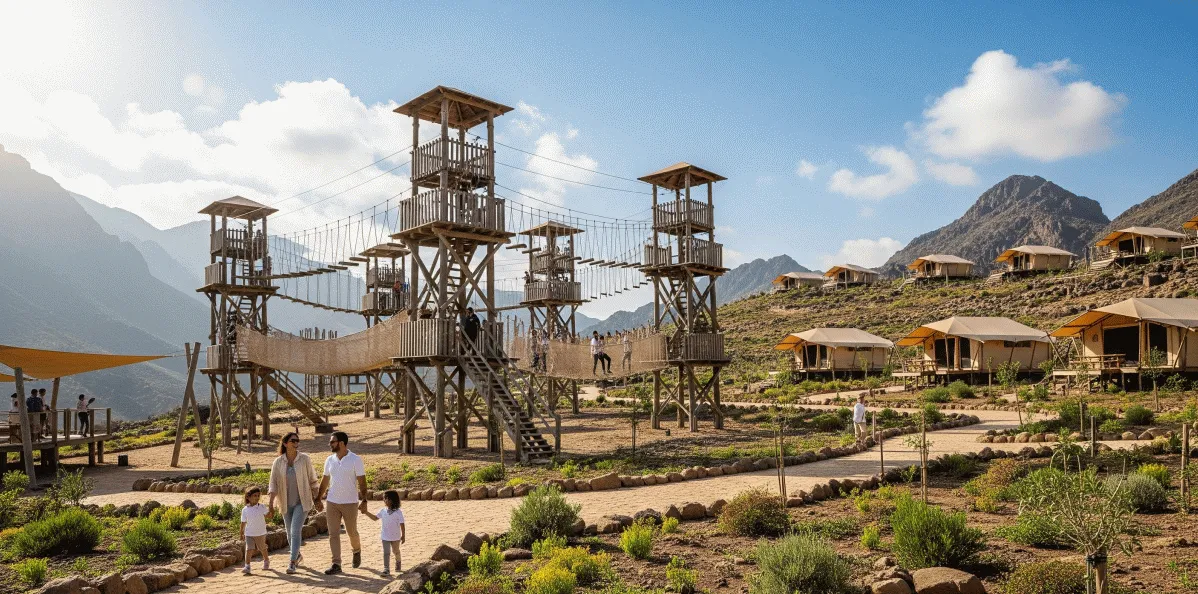
Understanding the strict divide between designated settlement areas and protected nature zones is critical for site zoning for adventure parks. Local environmental legislation often dictates that heavy foundations for ticketing and food pavilions must remain strictly within designated commercial boundaries. Meanwhile, the actual adventure elements can extend into the forest using freestanding poles that require minimal ground disturbance.
Navigating settlement areas for park foundations
Placing structural foundations requires careful coordination with local environmental agencies to avoid costly legal delays and permit rejections. Operators must leverage hybrid layout designs where heavy infrastructure is clustered at the commercial edge of the property. This strategy completely neutralizes environmental objections while keeping the natural aesthetic intact for your guests.
Utilizing poles to optimize operational expenditure
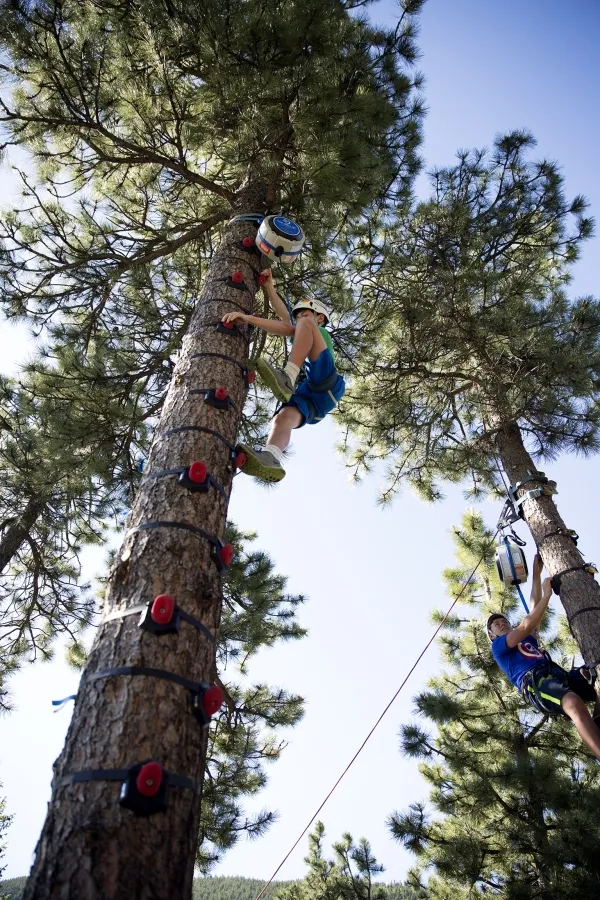
Relying on living trees for your structural support drastically increases long-term maintenance costs due to continuous arboreal assessments and hardware adjustments. Using freestanding steel or wood poles ensures a fixed, predictable maintenance budget that protects your operational expenditure. This targeted lifecycle management choice eliminates the unpredictable variables of working within dense, living forests.
Designing logistical flow for maximum dwell time
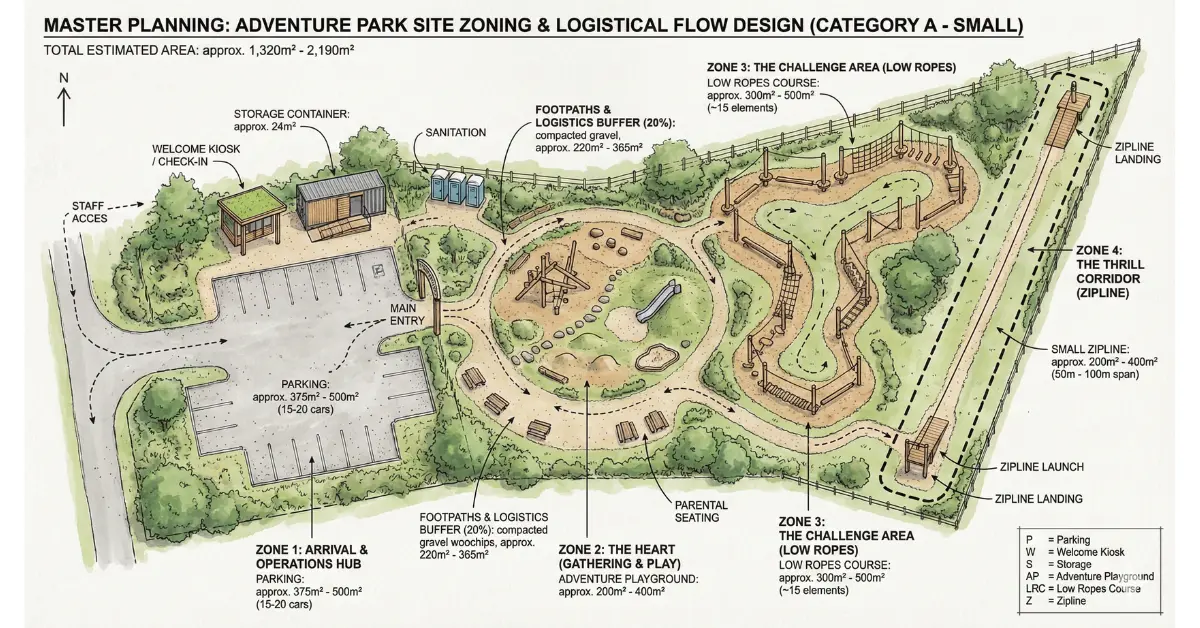
Profitable parks are won or lost during the zoning phase by strategically routing traffic to maximize secondary spend opportunities. When you are designing logistical flow for maximum dwell time, every pathway must naturally guide visitors toward rest areas and food kiosks. A well-planned layout turns a quick two-hour visit into a highly profitable full-day family event.
Centralizing the welcome kiosk and F&B terrace
The heart of your site must feature a centralized welcome kiosk and food terrace with clear sightlines to the high-adrenaline activities. This allows non-participating family members to comfortably relax while ordering food and beverages throughout the day. Positioning this hub at the crossroad of all major footpaths captures every guest multiple times during their visit.
Optimizing foot traffic in adventure parks
Creating a seamless visitor journey requires a dedicated logistics buffer and intuitive pathways that prevent bottlenecks during peak hours. You can effectively manage large crowds by designing one-way traffic systems that funnel exiting participants directly through retail and dining zones. This subtle spatial psychology drastically boosts your overall per-capita revenue effortlessly.

Shared infrastructure and civil engineering
Building an isolated park deep in nature where utilities must be constructed from scratch destroys the project's return on investment. Smart developers position their facilities to leverage existing municipal infrastructure like paved access roads and high-volume parking lots. Doing more with less civil engineering ensures that your capital is injected directly into revenue-generating attractions rather than basic utilities.
Category C park zoning layouts
A massive Category C destination requires a sophisticated balance of high-capacity parking, centralized storage, and dispersed attractions. These large-scale operations must include designated coach parking for corporate groups alongside modular storage units for safety equipment. By integrating these utility zones seamlessly into the landscape, the park maintains its immersive natural atmosphere without sacrificing operational efficiency.
The long-term success of your facility depends entirely on executing precise adventure park master planning before a single pole is installed. By strategically aligning your commercial zones, logistical pathways, and natural attractions, you will maximize both visitor satisfaction and bottom-line profitability. Invest heavily in your initial site design to ensure your destination remains a lucrative, high-efficiency operation for decades.
Planning an Adventure project? Need expert advice on Adventure park design?
Get in touch today!
Frequent asked questions
How do you zone an adventure park?
You must clearly divide your property into commercial settlement zones and natural activity zones to comply with environmental regulations. Proper adventure park master planning ensures that heavy foundations stay on the commercial edge while lightweight poles enter the forest. This separation streamlines the permitting process and protects the natural landscape.
What is the best layout for adventure park foot traffic?
The most profitable layout features a centralized hub-and-spoke model where all activities loop back to a main dining and rest area. This design naturally forces visitors to cross secondary spend zones multiple times during their stay. Keeping the pathways wide and directional completely eliminates frustrating bottlenecks during peak capacity.
How does master planning increase secondary spend?
By designing comfortable, shaded viewing terraces, you encourage non-participating guests to stay longer and purchase food or merchandise. Effective adventure park master planning dictates that exit routes physically guide guests through retail and dining areas. Increasing the overall dwell time from two hours to six hours exponentially multiplies your daily revenue.
Where should foundations be placed in an adventure park?
All heavy structural foundations must be located strictly within designated commercial or municipal settlement areas. Attempting to pour concrete deep within protected nature zones will trigger severe regulatory pushback and costly delays. Utilizing modular containers and freestanding poles allows you to bypass these heavy foundation restrictions entirely.
How do you design logistical flow for maximum dwell time?
You extend visitor stays by creating comfortable spectator zones with clear sightlines to the most exciting aerial attractions. Providing ample seating, accessible restrooms, and high-quality food options keeps families engaged and relaxed for the entire day. A stress-free environment ensures guests will linger longer and spend more money on-site.
Additional expert information on the Adventure Business
Interested to read more about the Adventure Business with our expert articles?
- Logistics and throughput in Adventure Parks, key elements in Customer satisfaction
- Integrating Gaming Technology into Adventure Parks
- How to plan your Adventure Park spatial requirements for maximum ROI
- Adventure Park Installation: How to Ensure Your Attraction is Built Right, the First Time
- Design is Your Best Investment Adventure Park Design
- The Benefits of Integrating Urban Adventure Play in Commercial Retail
- Creating Profitable Adventure Parks: Tips and Strategies
- Roller Coaster Zipline: The Thrilling and Profitable Amusement Solution
- Operational efficiency versus asset addiction in high-volume venues
- The Net Maze Attraction: Safe, Scalable Active Play for All Ages
- How to Launch a Zip Line Company
- Ride a bike modified to attach to a zipline cable
- Rope Course Construction: A Comprehensive Guide
- Leisure and Adventure in Retail Real Estate: The Future of Shopping
- The Benefits of Netted Attractions for Operators and Guests