





How to Build a Ropes Course: A Complete Guide
Building a high ropes course is a major investment that transforms unused space or forest canopies into high-yield adventure destinations. Whether you are developing a standalone high-wire park or integrating an attraction into an existing family entertainment center, the journey from concept to opening day requires rigorous planning. This guide covers the essential phases of ropes course construction—from calculating your spatial footprint and conducting site feasibility to understanding safety standards and selecting professional builders.
Understanding ropes course types
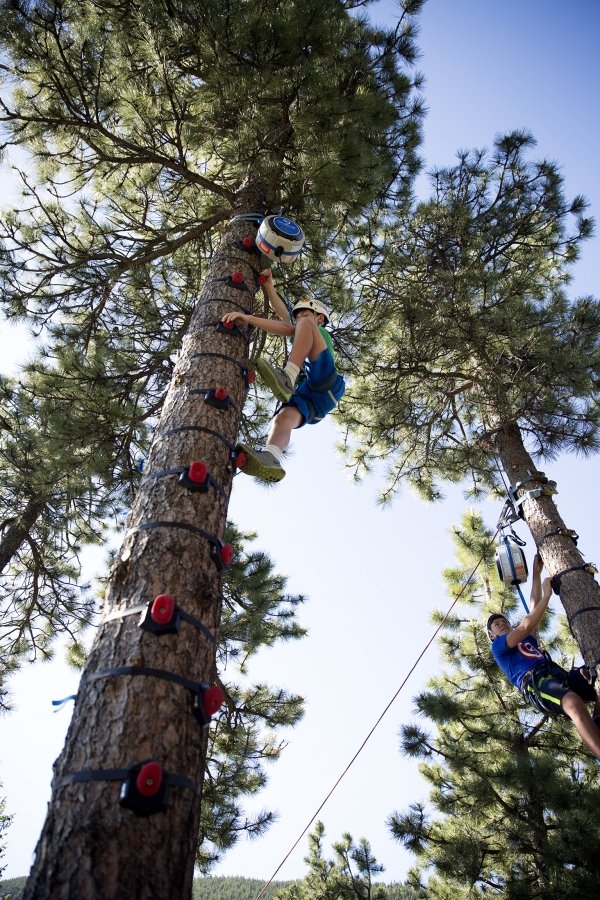
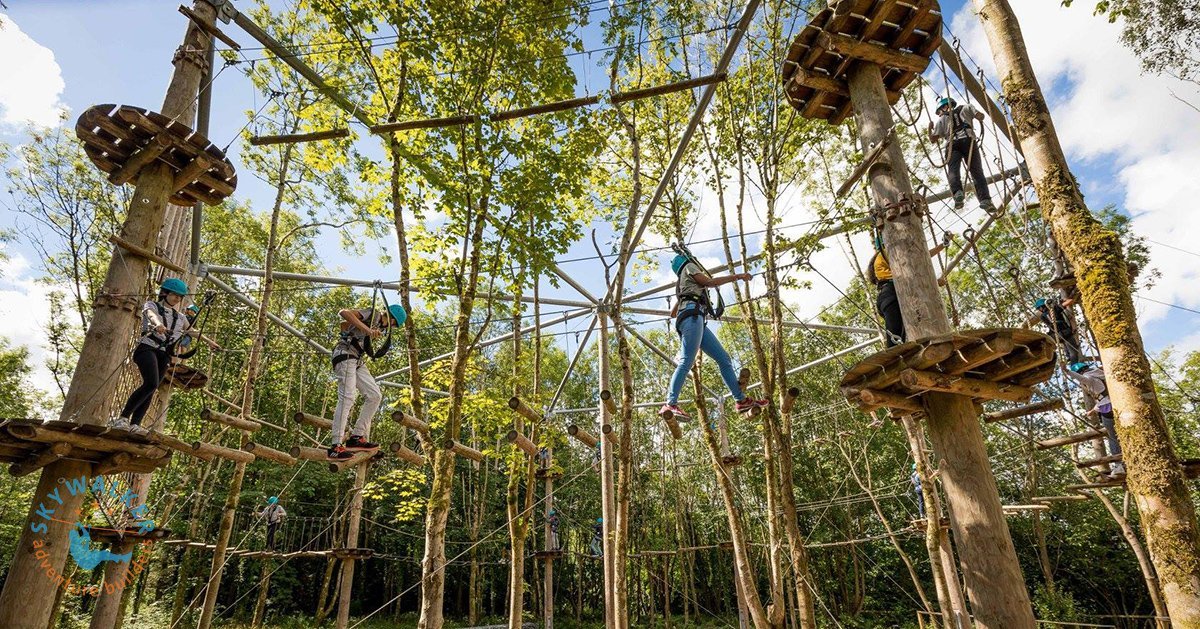
Ropes courses are categorized not just by their height (low vs. high), but by the structural system supporting them. The choice between utilizing an existing forest canopy or erecting freestanding artificial poles dictates your design, capacity, and spatial requirements.
Site selection and feasibility for a ropes course
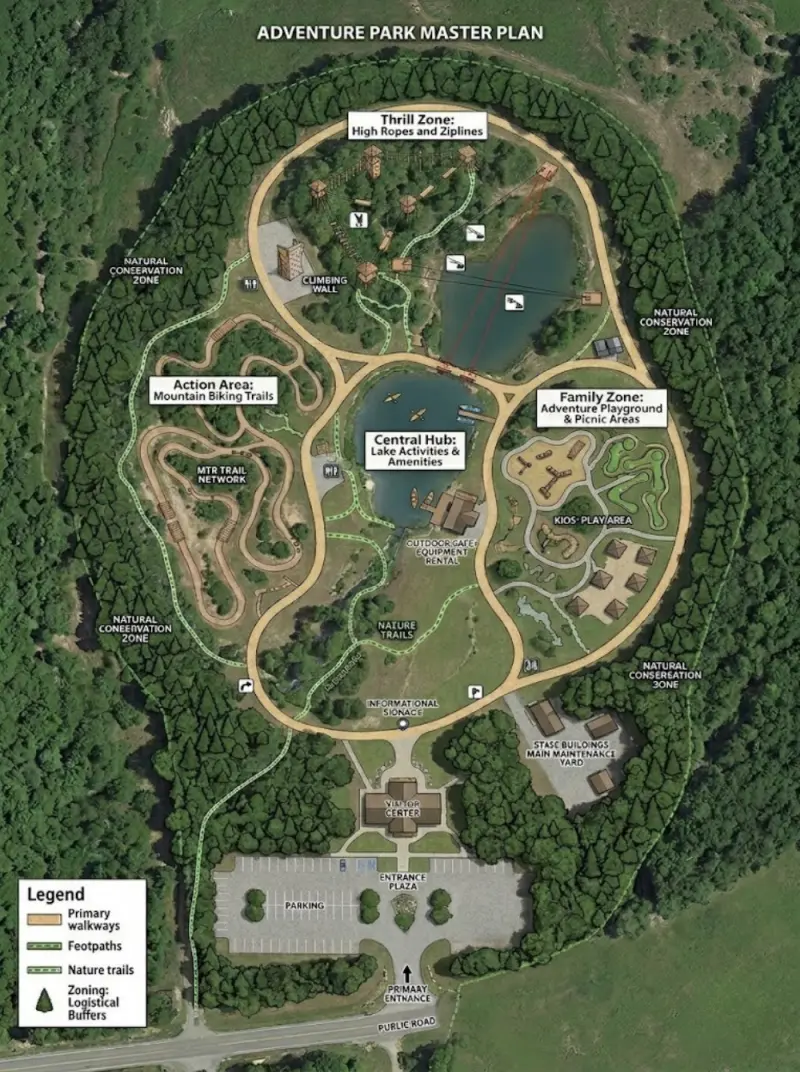
Before breaking ground or ordering materials, professional ropes course builders begin with a master plan and feasibility study. Site selection governs the physical limits of your attraction and dictates critical operational elements like guest flow, safety zones, and secondary spend hubs.
Safety standards, regulations, and certifications
In the adventure leisure sector, safety is non-negotiable. Ropes course construction in Europe and international markets adopting EU standards must rigorously comply with the EN 15567 standard. This standard is divided into two distinct parts:
Designing a high ropes course layout
Your available footprint and target daily throughput directly dictate the architectural layout of the climbing structures. Modern high ropes design focuses heavily on density—stacking multiple game levels on a single pole array to maximize ROI per square meter.
When factoring in footpaths, logistics buffers, and arrival areas, an entry-level "Small Category" park (targeting 60 visitors/day) requires a total estimated area of roughly 1,320m² to 2,190m². A "Large Category" park (targeting 300 visitors/day) with a ZipCoaster, netted play zones, and advanced ropes elements expands to 7,700m² to 12,360m².
Materials and equipment needed
Ropes course installation utilizes highly specialized industrial components. Commercial-grade builds do not use standard hardware store materials; every element is rated for extreme load bearing and prolonged environmental exposure.
Ropes course construction and installation steps
A professional build is heavily front-loaded. By the time machinery arrives on your site, 70% of the project work—engineering, material processing, and obstacle pre-assembly—has already been completed off-site.
Groundworks and Foundations
Site preparation begins with pathing, structural footings, and pole delivery. For freestanding courses, massive ground anchors and concrete bases are poured according to engineering calculations to withstand wind and dynamic loads.
Primary Structural Erection
Poles are craned into position or tree brackets are mounted. The main load-bearing steel cables (life lines and walking lines) are strung and tensioned to exact EN 15567 specifications.
Obstacle and Belay Installation
Pre-assembled games and platforms are hoisted and secured. Simultaneously, the continuous belay safety wire is threaded through the course, ensuring guests have an uninterrupted safety connection.
Testing, Inspection, and Handover
Before any guest is allowed on the course, an independent Type A certification inspection occurs. Once passed, operator training begins, transitioning the park from construction site to active business.
Choosing professional ropes course builders and contractors
Building an adventure park is not a standard landscaping or civil engineering job. General contractors lack the specialized expertise to tension dynamic life-safety cables or integrate continuous belay systems effectively.
When evaluating challenge course builders, require proof of:
- Turnkey capability: Can they manage the project from concept and blueprinting through to final certification and staff training?
- Standard compliance: Do they guarantee their builds will pass independent EN 15567 inspections on the first attempt?
- Master planning scope: A premium builder evaluates your business case and parking infrastructure, not just the wood and steel.
Maintenance and ongoing safety checks
Construction is only phase one. Protecting your investment requires structured lifecycle management. As operators transition into daily park management, maintenance shifts from construction checks to wear-and-tear monitoring.
Frequently asked questions about ropes course construction
Continue your project planning