


• 1.jpg
  • 2.jpg
  • 3.jpg
  • 4.jpg
  • 5.jpg
  • 6.jpg
  • 7.jpg
  • 8.jpg
Ropes Course ROI: How to Ensure a Profitable Adventure Park Business
◆ Adventure Business · Tips & Strategies

Creating Profitable Adventure Parks

As experienced ropes course builders, we understand the rising demand for aerial adventure parks as valuable sources of physical activity and team-building. For entrepreneurs seeking a unique business venture, ropes course construction offers a highly flexible model with rapid ROI potential. This guide outlines the commercial advantages of launching a ropes course business and the strategic steps required to build a profitable, engaging destination for your community.

Executive Summary

Key Takeaways

Adventure parks generate the highest revenue per visitor compared to zip lines or ground-based experiential courses.
The industry showed an average profit margin of 25% in 2018, proving its viability as a high-yield investment.
Courses can be built indoors for year-round operation or outdoors with minimal facility footprints.
Quality equipment and proactive lifecycle management are critical to minimizing long-term maintenance costs.
Business Model

A Flexible Blueprint with Rapid Returns

Our high ropes course construction services provide a flexible business model that functions either as a standalone attraction or an expansion to existing operations. High ropes courses contribute significantly to a billion-dollar recreation sector, offering the excitement of amusement parks without overwhelming local competition.

Beyond direct profitability, they provide unmatched location flexibility. Indoor installations guarantee year-round revenue regardless of weather, while outdoor challenge courses require minimal enclosed infrastructure. This dynamic setup encourages repeatable visits, as guests return to master new skills and bring groups for team-building or active leisure.

Additionally, ropes courses naturally attract a reliable workforce. The exciting environment draws energetic college students seeking meaningful positions during summer breaks, ensuring high-quality, enthusiastic staffing.

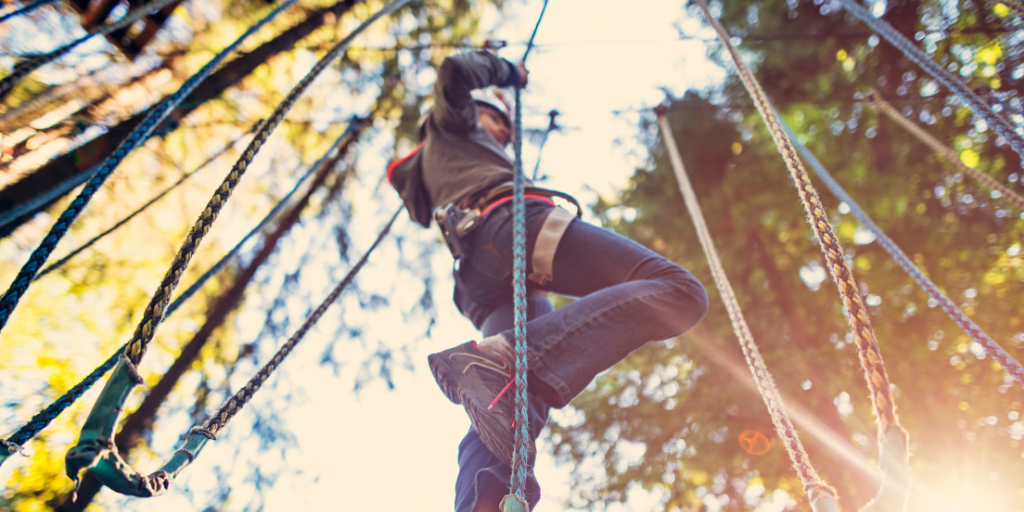
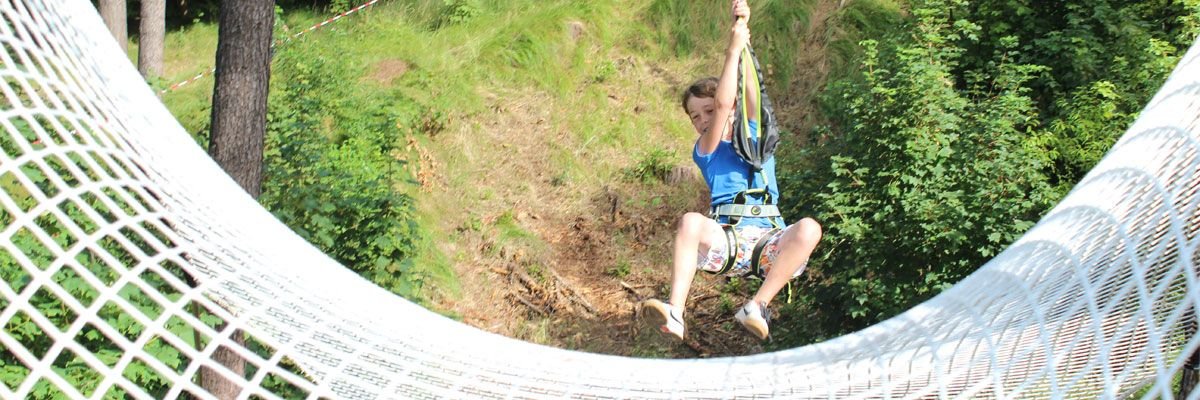
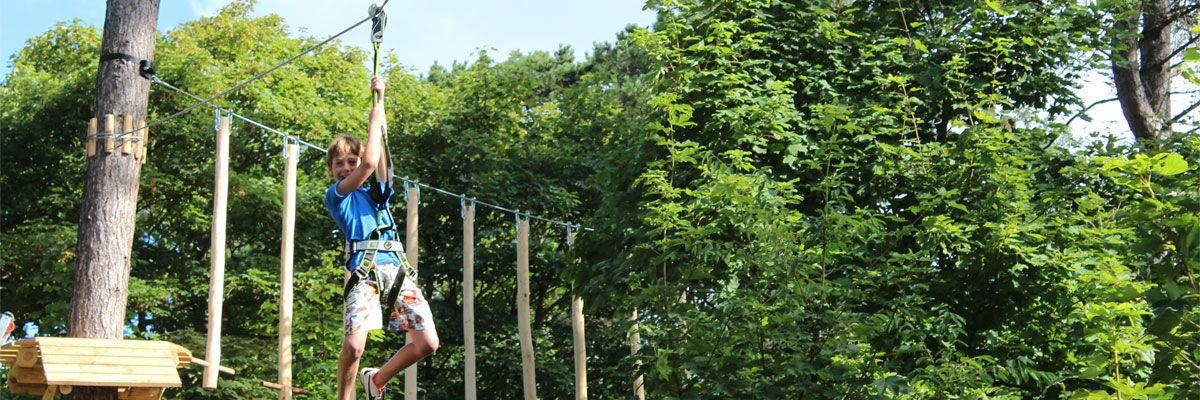
Outdoor high ropes course demonstrating flexible park construction

Flexible setups allow for unique layouts in dense woodland or open terrain.

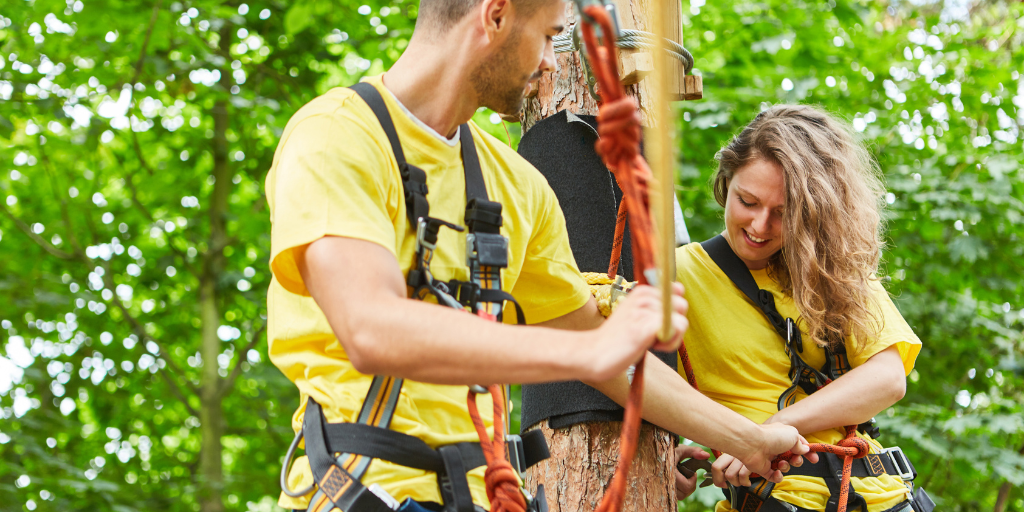
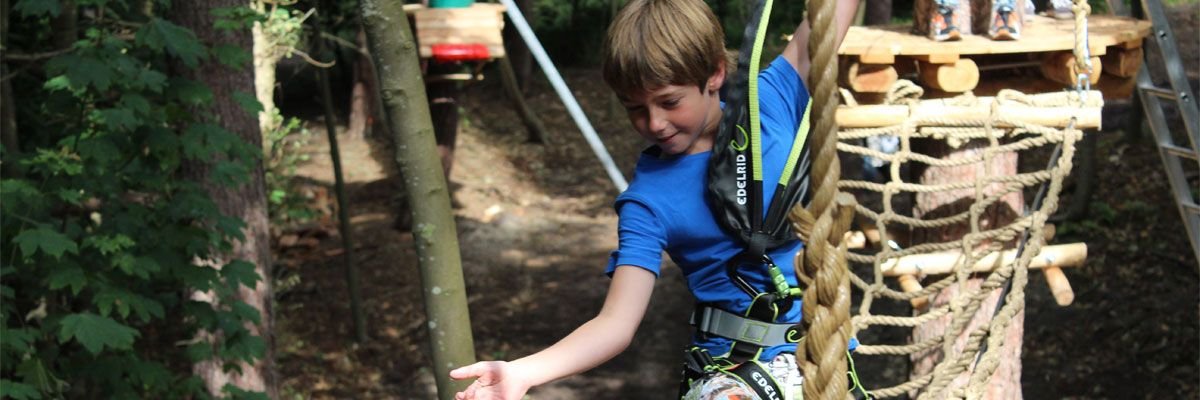
Staff assisting customers on a belayed high ropes course

Belayed courses cater to an older audience seeking high-thrill experiences.

System Categories

Belayed vs. Non-Belayed Designs

Aerial adventure parks primarily fall into two distinct categories, each serving a different target demographic and operating model:

  • Belayed Courses: Visitors wear a harness connected to a continuous or smart belay system. These offer higher elevations and increased challenge levels, catering to older audiences and thrill-seekers. They require a higher initial equipment investment and more trained staff.
  • Non-Belayed Courses: Often enclosed by nets, visitors traverse without harnesses. These provide moderate challenges, attract a younger, family-oriented audience, and foster a highly relaxed, play-oriented atmosphere with lower staffing requirements.

Choosing the correct system depends heavily on your funding, target demographic, and location constraints.

Cost & Strategy

Managing Capital, Operations, and Expansion

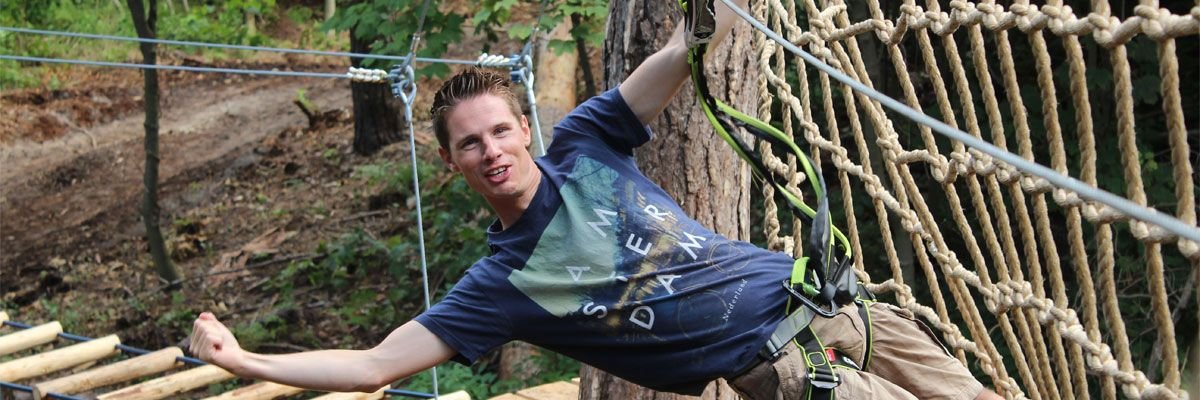
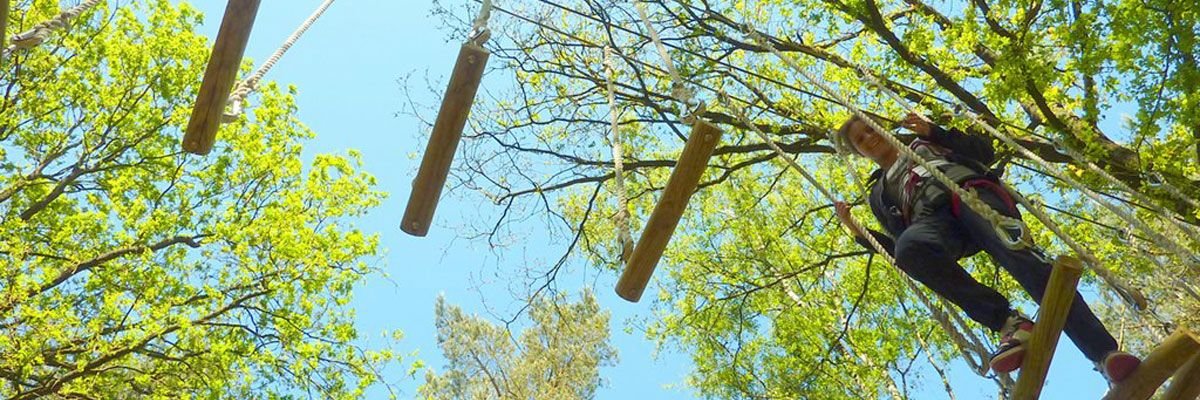
A well maintained ropes course structure in a forest environment

Embarking on a ropes course venture demands a substantial upfront capital investment encompassing land, construction, equipment, and staff training. However, because the average challenge course ticket price exceeds that of a movie ticket or restaurant meal, properly targeting customers with disposable income ensures strong operating returns.

Once operational, course maintenance becomes your primary challenge. To minimize long-term expenses and maximize ROI, you must invest in durable, high-quality hardware. Inferior parts lead to compatibility issues, frequent replacements, and complicated inspections. A well-designed course combined with proactive lifecycle management significantly reduces the burden of mandatory annual safety checks.

As your business matures, maintaining a competitive edge requires adaptation. Consider diversifying your site by integrating complementary attractions, such as ziplines or a ZipCoaster, to capture new market segments and encourage repeat visits from your existing customer base.

Knowledge Base

Frequently Asked Questions

Why is an adventure park considered a high-yield investment?

Adventure parks generate the highest revenue per visitor compared to traditional ground-based activities. The sector demonstrated an average profit margin of 25% in recent industry studies, supported by low daily competition and high repeatability.

What is the primary difference between belayed and non-belayed courses?

Belayed courses require harnesses and safety lines, allowing for higher elevations and thrilling challenges suited for older demographics. Non-belayed courses typically use safety nets instead of harnesses, offering moderate challenges perfect for younger, family-oriented audiences.

What are the main ongoing challenges for operators?

The most notable hurdles post-launch are maintaining the course to strict safety standards, managing annual compliance inspections, and successfully marketing to the correct economic demographic capable of sustaining the premium ticket prices.

How does equipment quality affect long-term ROI?

Investing in high-quality, durable equipment upfront prevents expensive compatibility issues and frequent replacements. Courses built with low-quality parts often fail inspections and incur significantly higher long-term maintenance costs, directly reducing profitability.

Can a ropes course operate year-round?

Yes. While outdoor courses are heavily influenced by seasonal weather, indoor ropes courses can operate year-round. An indoor facility shields the attraction from the elements, ensuring a consistent, predictable revenue stream.

EN 15567 Compliant European Quality Standards Full Lifecycle Support

Ready to start your project?

Our consultancy team will assess your site, define a concept, and produce a fixed-price proposal — with the feasibility fee credited back to construction.

Related reading

Explore the adventure business

Turnkey planning Build Your Park

The full Skywalker process: from fixed-price feasibility study through design, engineering and opening day.

Service Consultancy — Feasibility & Concept

What a Skywalker feasibility study covers — and how the fee credits back into construction cost.

Service Design & Architecture

How Skywalker translates a site concept into engineered construction drawings and permit-ready specifications.

Service Concepting & Theming

Turning a site brief and investor vision into a coherent, themed guest experience with commercial logic.

Service HRM & Operations Planning

Staffing structures, hiring frameworks and operating model design for adventure parks at scale.

Product AirCruizer Cable Bicycle

An aerial cable bicycle that adds a low-intensity, family-accessible revenue stream to any adventure destination.

Product Net Adventure

Multi-level suspended net structures — high dwell time, low staffing cost, strong ROI for family parks.

Product Ultimate Adventure Tower

A vertical multi-discipline anchor attraction that drives park-wide footfall and upsell across adjacent attractions.

Service Zipline Design & Engineering

Engineered zipline specifications — why site-specific design protects your permit, insurance and long-term operating margin.

Products overview All Products — Attraction Range

Browse the full Skywalker product range to plan your park's attraction mix and revenue model.