



• 1.jpg
  • 2.jpg
  • 3.jpg
  • 4.jpg
  • 5.jpg
  • 6.jpg
  • 7.jpg
  • 042A8449-LowRes.jpg
  • inclusive-climbing.jpg
  • JULY-24-071.jpg
  • JULY-24-079.jpg
  • RVR_zipline-06.jpg
◆ Zipline Design · Guide

Zipline landing zone design and setup: a practical guide

Most of the work on a zipline happens at the end of the line. That is where every rider has to be slowed down, stopped and unclipped, whatever their weight, whatever the wind. This guide explains what a landing zone is, how to size it from the arrival speed, how to lay it out and how to run it day to day.

Short answerA zipline landing zone is the last part of the line where riders slow down, stop and get off. It includes the braking section of the cable, the main brake, an independent emergency arrest device, the landing platform or ground area, a safe staff position, a clear exit and enough clearance around the rider. Its length follows from the highest arrival speed and the deceleration the brake system allows.
Landing zoneBraking distanceZipline operators
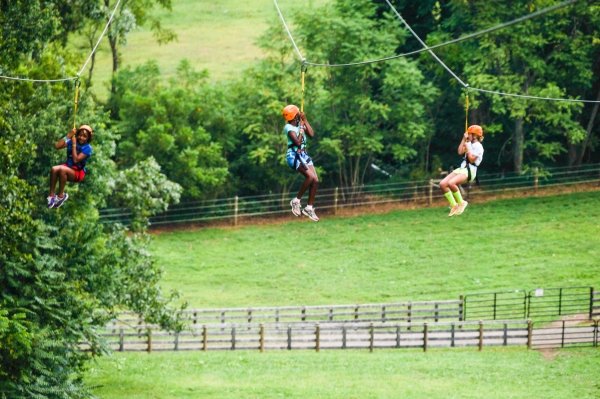
Riders on parallel ziplines against a blue sky
Definition

What is a zipline landing zone?

The landing zone is the stretch at the end of the line where the ride ends: the rider arrives, is slowed down, comes to a stop and is unclipped. It is not one part but a small system, and every part depends on the others.
✓
Braking section. The last part of the cable, where the rider slows down. Its length follows from the arrival speed.
✓
Main brake. Spring, magnetic or block-and-tackle brake that stops every rider without help from the rider.
✓
Emergency arrest device. An independent brake that stops the rider if the main brake does not.
✓
Landing platform or ground area. Where the rider is received and unclipped.
✓
Staff position. A place where the guide can see the line, reach the rider and stay out of the rider's path.
✓
Exit and clearance. A separate way off the platform, and free space under and beside the rider.
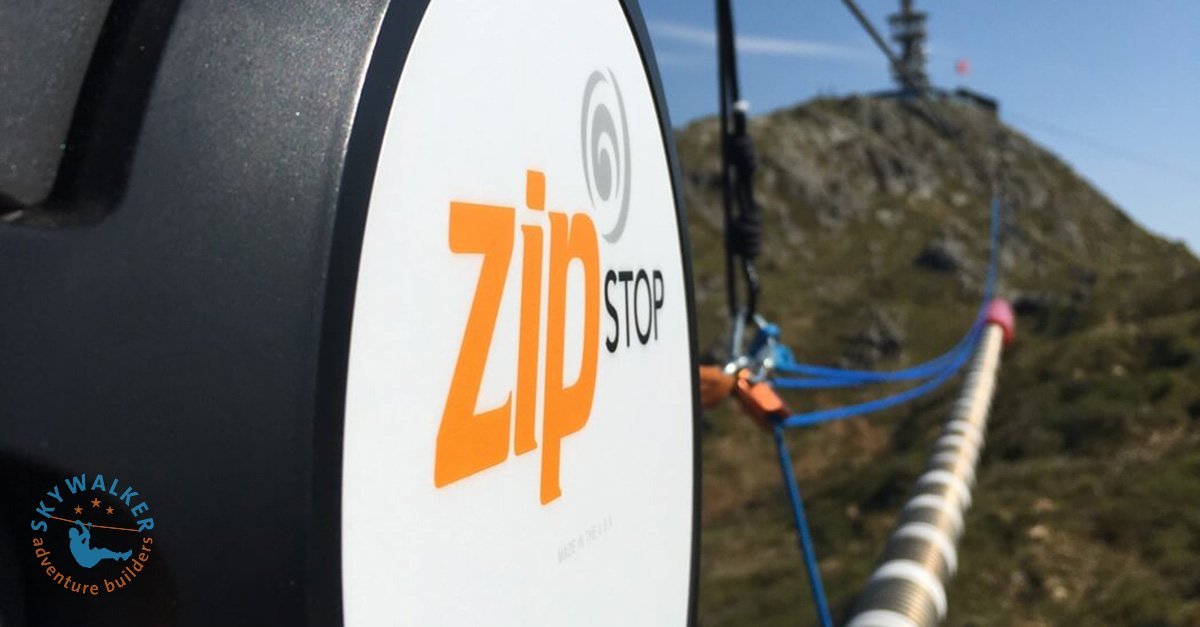
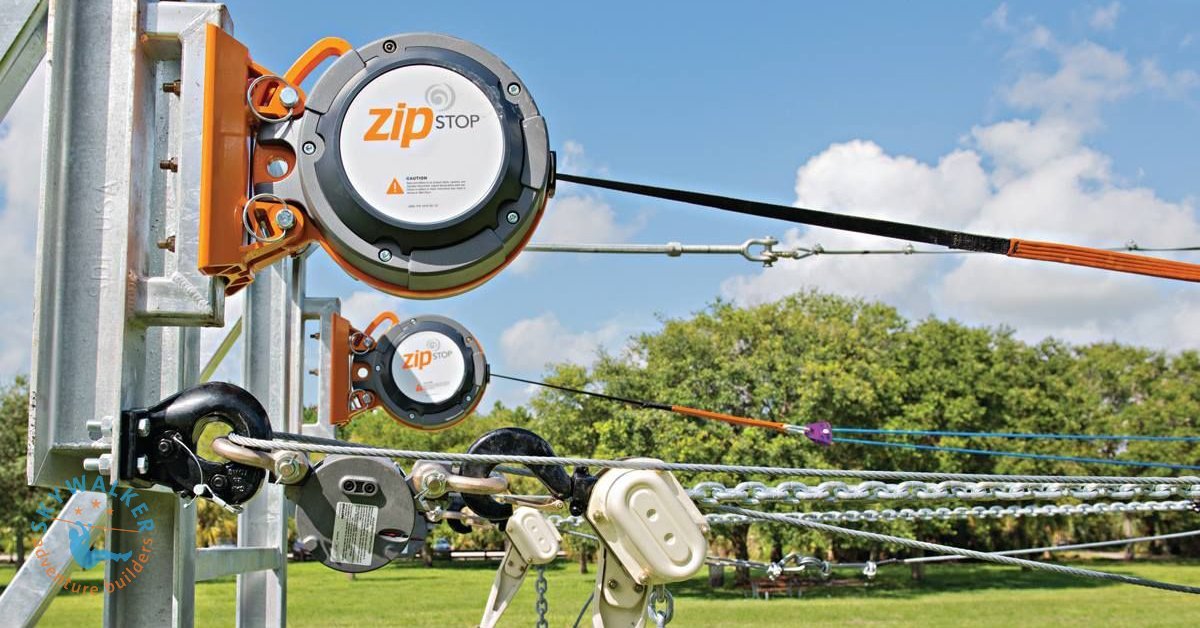
Zipline end brake with spring emergency arrest device at the landing

Main brake and emergency arrest device at the end of a line: two independent ways to stop the rider.

For all the other parts of a line, see the parts of a zipline.

Sizing

Arrival speed sets the length

The faster riders arrive, the longer the landing zone has to be. The table shows the minimum stopping distance for a constant deceleration of 1 g and 2 g. Real brakes do not decelerate evenly, so a design always adds margin.

Arrival speedIn m/sStopping distance at 1 gStopping distance at 2 g
20 km/h (12 mph)5.6 m/s1.6 m (5 ft)0.8 m (3 ft)
30 km/h (19 mph)8.3 m/s3.5 m (12 ft)1.8 m (6 ft)
40 km/h (25 mph)11.1 m/s6.3 m (21 ft)3.1 m (10 ft)
50 km/h (31 mph)13.9 m/s9.8 m (32 ft)4.9 m (16 ft)
60 km/h (37 mph)16.7 m/s14.2 m (46 ft)7.1 m (23 ft)

Design for the fastest rider

The highest arrival speed comes from the heaviest rider on a warm, dry day with a tailwind. The lightest rider in a headwind may hardly reach the brake at all. A good landing zone works for both: it stops the fast rider within the braking section and still lets the slow rider arrive.

How speed, g-forces and brake types interact is explained in zipline braking dynamics.

How the table is calculatedStopping distance = v² ÷ (2 × deceleration), with g = 9.81 m/s². Example: 60 km/h is 16.7 m/s; at a constant 1 g that takes 16.7² ÷ (2 × 9.81) = 14.2 m. The brake manufacturer's limits and the design standard decide which deceleration is acceptable for your riders.
Layout and setup

Laying out the landing zone

Once the braking distance is known, the layout follows. The same rules apply whether riders land on a platform or on the ground.
🛬

Platform landing

Used where the line ends high above the ground or at a tower. The platform must be long and wide enough for the brakes to work, for the guide to stand clear of the rider's path and for riders to leave by a separate exit.

🌱

Ground landing

Possible where the terrain rises to meet the line. The ground must be level and firm, free of obstacles, and the rider's feet must not touch the ground before the brake has done its work.

👷

Staff position

The guide needs a clear view up the line, a way to stop dispatch, and a position outside the rider's path. Radio or signal contact with the launch is standard.

Clearance

  • Check clearance with the line loaded by the heaviest rider, at the lowest point of the sag
  • Keep the space under and beside the rider free of branches, railings and structures
  • Allow for the rider swinging forward when the brake engages
  • Keep spectators and waiting riders out of the landing zone

Platform sizes for busy lines are covered in zipline platform design for high-capacity courses.

Installation of a zipline end brake and trolleys at a landing platform
Daily operation

Running the landing zone

  • Check the main brake, the emergency arrest device and their anchors before the first ride
  • Run test weights at the start of the day and after any change to the line or the brake
  • Watch the wind: stop or adjust dispatch when tailwind raises arrival speeds
  • Keep the rider weight range on the line within the design range
  • Record checks, adjustments and replacements in the logbook

Our lifecycle management service sets up the inspection routine with your team. Need parts? See zipline braking systems, zipline trolleys and zipline harnesses in our shop.

Frequently asked questions

What is a zipline landing zone?

The landing zone is the end section of a zipline where riders slow down, stop and get off. It includes the braking section of the cable, the main brake, an emergency arrest device, the landing platform or ground area, the staff position and the exit.

How long does a zipline landing zone need to be?

It depends on the highest arrival speed and the deceleration the brake allows. At a constant 1 g, a rider arriving at 40 km/h (25 mph) needs 6.3 m (21 ft) to stop, and at 60 km/h (37 mph) 14.2 m (46 ft). The design adds margin on top of that.

Do I need an emergency arrest device?

On a commercial line, yes. The emergency arrest device works independently of the main brake and stops the rider if the main brake fails or is set up wrongly.

Can riders land on the ground instead of a platform?

Yes, where the terrain allows it. The ground must be level, firm and free of obstacles, and the brake must slow the rider down before their feet reach the ground.

Related content
Zipline design packages
From a 5–10 day feasibility study to the Construction Book and certification support. Fixed fee per package, the study fee credited back when we build.
✓ Adventure park builder since 2005✓ Ziplines designed to EN 15567✓ Annual main inspection and lifecycle support✓ Offices in Ede, Amsterdam, Dubai and Riyadh

Planning a zipline or reworking a landing?

Tell us about your line. We advise on the next step, usually a fixed-fee feasibility study, before you commit to construction.