• blog_header-01.png
  • blog_header-02.png
  • blog_header-03.png
  • blog_header-04.png
  • blog_header-05.png
  • blog_header-06.png
  • blog_header-07.png
◆ Continuous Belay · Equipment

Saferoller V3 trolley: how the continuous belay PPE works

The Saferoller is a rolling trolley that keeps a guest connected to one safety line from the start of a ropes course to the end, zipline sections included. Version 3 brought a new textile strap with a swivel, a two-lock evacuation system and a more compact body. This article explains how the trolley works, which roller to choose and what it means for daily operation.
Short answerThe Saferoller V3 is a continuous belay trolley: personal protective equipment (PPE) that rolls along a single safety line of 12–12.7 mm (½ in), so a guest cannot unclip anywhere on the course. It comes with Teflon rollers for courses with ziplines up to 120 m (394 ft) or stainless steel rollers for ziplines of any length.
Continuous belayPPE trolleyRopes course operators
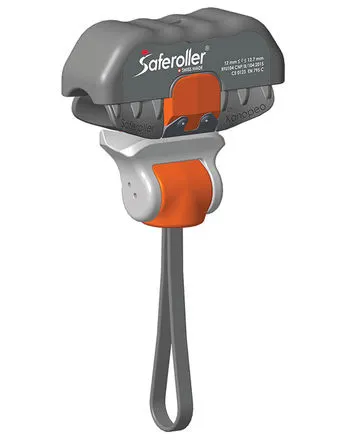
Saferoller V3 continuous belay trolley with textile strap and connector
Continuous belay

One line, one trolley, no unclipping

On a traditional ropes course the guest moves two carabiners from cable to cable. On a continuous belay course, the trolley is clipped onto the safety line at the start and only comes off at the end. The guest never has to make a safety decision, and staff no longer need to check every transfer.
What changed in version 3

✓
Textile strap with 360° swivel. The strap is a Dyneema/Nylon blend. It raises the centre of gravity, so the load goes straight into the trolley and the guest can turn freely.
✓
Two-lock evacuation system. Trained staff can take the trolley off the safety line quickly in an emergency and reconnect it just as fast.
✓
Hot-forged anchor. The connection device anchor is hot-forged for strength and durability.
✓
30% more compact. According to the manufacturer, the smaller body handles tight curves more easily.
✓
Clearer ID numbers. Each trolley has an individual number that is easier to read during checks.
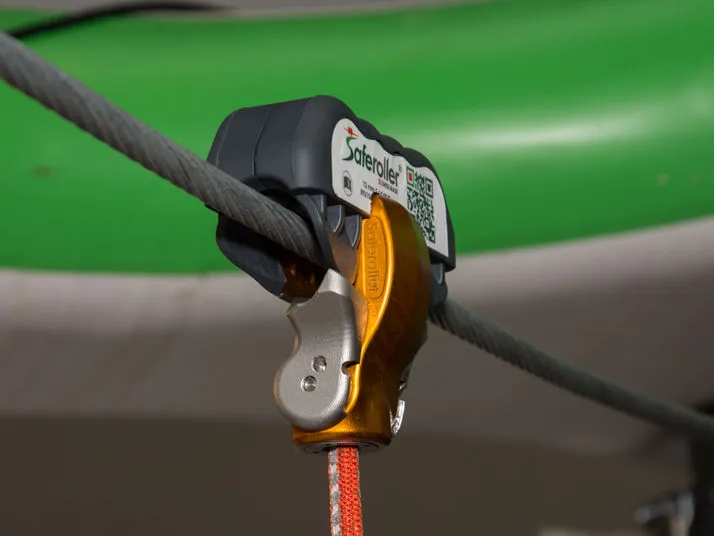
Saferoller V3 trolley running on a ropes course safety line

The Saferoller V3 on the safety line. The guest stays connected from start to finish, through platforms, elements and zipline sections.

For the wider picture, read continuous belay systems for the aerial adventure industry or see how we build them into a course on the continuous belay system page.

Rollers and standards

Teflon or stainless steel rollers?

Each roller runs on twin sealed ball-bearing sets. The choice of roller material depends mainly on the ziplines in your course.

Teflon rollersStainless steel rollers
ZiplinesUp to 120 m (394 ft)Any length
SpeedNormal course and short zipline speedsUp to 125 km/h (78 mph), according to the manufacturer
SoundSilentAudible on the line
Wire rope wearReduces wear on the safety lineStandard
Typical useRopes courses and forest parks with short ziplinesCourses with long or fast ziplines
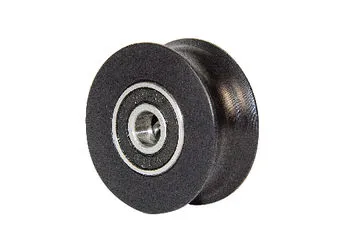
Saferoller trolley with Teflon rollers

Teflon rollers: silent and lighter on the wire rope.

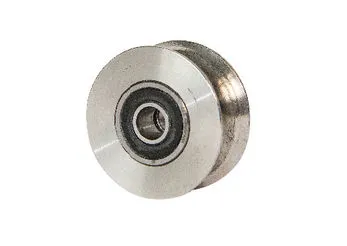
Saferoller trolley with stainless steel rollers

Stainless steel rollers: for ziplines of any length.

StandardsIn EN 15567, a continuous belay system is category E: the guest cannot detach from the safety line during the activity. The connection device follows EN 17109. According to the manufacturer, the Saferoller trolley is tested as PPE by TÜV SÜD. The safety line must have a diameter of 12–12.7 mm (½ in).
Daily operation

Evacuation, wear checks and maintenance

A continuous belay system takes the most common human error out of the course. It does not take away the need for trained staff, a rescue plan and regular checks.
Rescue and evacuation

If a guest gets stuck, staff need to reach them, take over the load and bring them down. With the two-lock system, the trolley can be released from the safety line in a controlled way and reconnected afterwards. The rescue procedure belongs in your operating manual and in staff training.

Wear and replacement parts

Wear parts have wear protection and stainless steel replacement parts that the operator can change. A wear measurement system shows when a part has to be replaced. Record every check and replacement against the trolley's ID number, as for any PPE.

We set this up with you through training and education and lifecycle management.

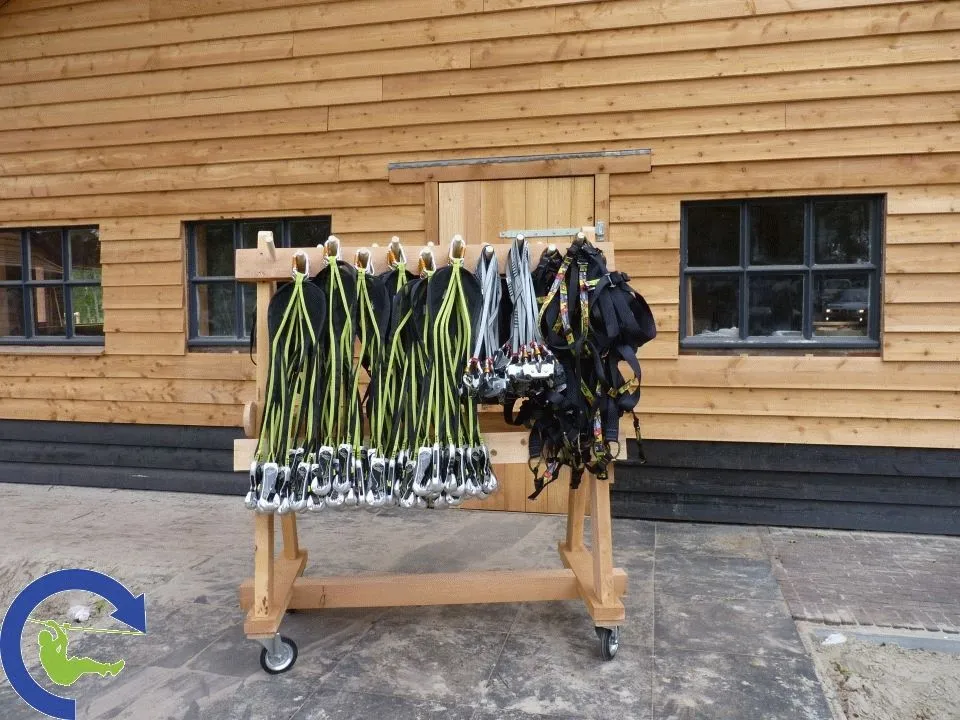
Rack of continuous belay trolleys with harnesses at a ropes course

Trolleys and harnesses stored per ID number: makes daily checks and records simple.

Need trolleys or spare parts for an existing course? See the Saferoller continuous belay range in our shop.

Frequently asked questions

What is a Saferoller?

A Saferoller is a continuous belay trolley. The guest is clipped to it at the start of the course and stays connected to one safety line until the end, including on zipline sections. Because there are no carabiners to move, the guest cannot unclip by mistake.

What is a PPE trolley?

PPE stands for personal protective equipment. The trolley is part of the guest's fall protection, together with the harness and lanyard. That means it is inspected and recorded as PPE: each trolley has its own ID number, and checks and replacements are logged.

Can the Saferoller V3 be used on ziplines?

Yes. With Teflon rollers it is used on courses with ziplines up to 120 m (394 ft); with stainless steel rollers on ziplines of any length. The zipline itself still needs a design with enough braking distance at the landing.

Can an existing ropes course be switched to continuous belay?

Often, but the course needs a continuous safety line of 12–12.7 mm (½ in) that runs through every element and platform without breaks. That usually means changes to the line routing and the platforms. Send us your course details and we will tell you what is involved.

Related content
✓ Adventure park builder since 2005✓ Ropes courses designed to EN 15567✓ Training and lifecycle support✓ Offices in Ede, Amsterdam, Dubai and Riyadh

Planning continuous belay for your course?

Tell us about your course or your plans. We advise on the belay system, the line routing and the training your team needs.