





Why zip line trolley bearings matter
Bearings are a small part of a zip line trolley, yet they are often the first part to wear and the most common reason a trolley is retired. Using the LightSpeed EZ Clip and Micro trolleys from TruBlue Technologies (formerly Head Rush Technologies) as an example, this article explains what a bearing does, what its ratings mean and what operators should check.
Key takeaways
What a bearing does
A bearing lets two parts move against each other with little friction. Instead of two surfaces sliding over each other, balls or rollers carry the load and roll, so the parts wear far less over time. Bearings are everywhere: in car engines and steering columns, washing machines, bikes and skateboards, and in every zip line trolley.
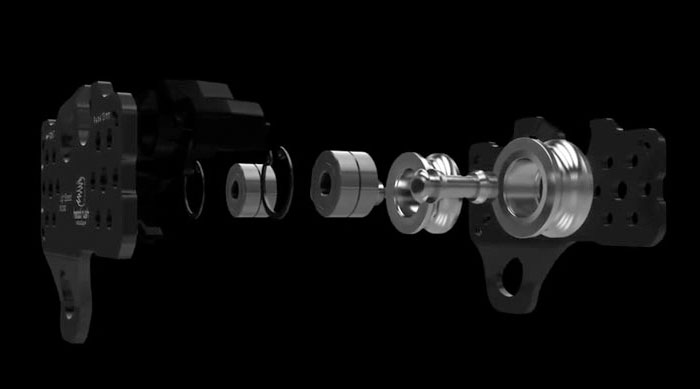
Why bearings matter in a zip line trolley
In a trolley, the bearings sit inside the sheaves, the wheels that roll on the cable. At high speed, friction in the sheaves creates heat. A good bearing keeps that friction low, which means less heat, less wear and a more consistent ride. Worn bearings do the opposite: they change how fast riders arrive at the brake, which is why bearing condition is part of every pre-use check. For a full explanation, see our zipline spring brake guide.
Inside a ball bearing
A ball bearing has an inner race and an outer race, each with a groove for the balls to roll in. A cage (or retainer) keeps the balls evenly spaced while they turn, and a shield covers the gap to keep dirt out and lubricant in. The bearings in the EZ Clip and Micro trolleys have seven balls each.
Steel cage versus plastic cage
Many trolley bearings use a plastic cage. Heat builds up quickly inside a sheave at speed, and plastic does not cope well with heat. A steel cage is far more resistant to heat damage and keeps the balls aligned for longer.
Metal shield versus rubber seal
A rubber seal fits snugly against the rotating inner race. That keeps water and dirt out at first, but it also creates friction and wears quickly when it gets hot. A metal shield leaves a tiny gap to the inner race: one friction point less, less heat and better protection over the long run.
What the ABEC rating means
ABEC is a tolerance class for precision bearings: 1, 3, 5, 7 or 9, where a higher number means tighter tolerances on shape and surface. It does not cover material quality, load capacity or lubricant, so it is one indicator of quality, not the whole picture.
Two bearings per sheave
One bearing per sheave would carry the load. The LightSpeed EZ Clip and Micro trolleys use two, so the rider's load is spread over four bearings per trolley and each bearing works less hard. According to the manufacturer, the bearings are ABEC-rated, made of high-carbon steel from Japan and allow running speeds of up to 120 km/h (75 mph). Speed on a real line is set by its design and braking concept; see zipline braking systems.
Zip line trolley bearings FAQ
Related zipline guides